

LET IT GO NOW: THE DAVID FORMAN STORY
The complete liner notes to the newly discovered 1977 album.

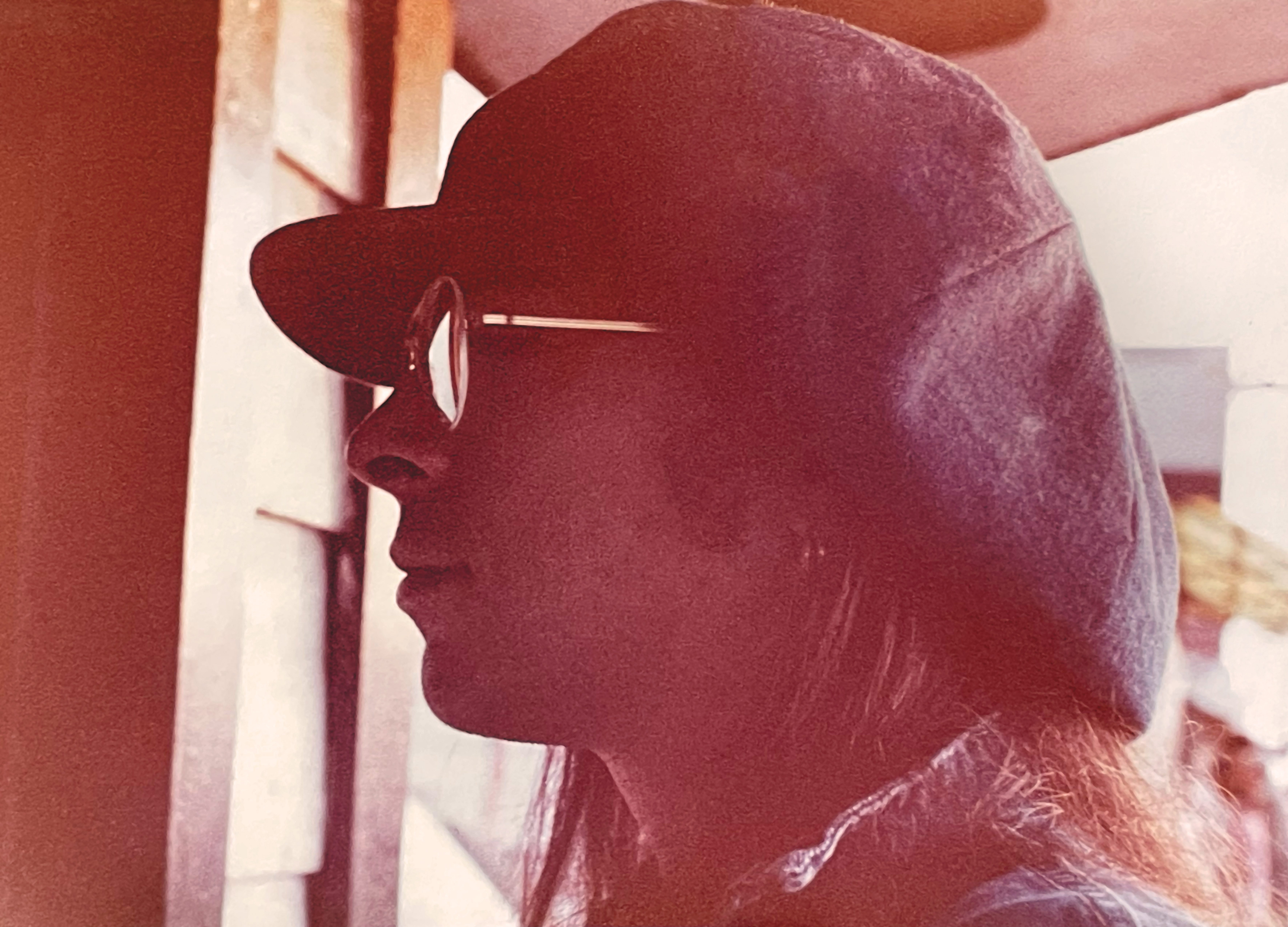
Today Record Lung is proud to present the complete liner notes for the newly-released album Who You Been Talking To by David Forman, recorded in 1977, produced by Jack Nitzsche, and issued for the first time by High Moon Records. Included here are some exclusive photographs from the booklet found inside the LP.
You can listen to the full album HERE, and you can order your own vinyl or CD copy HERE.
⚡️
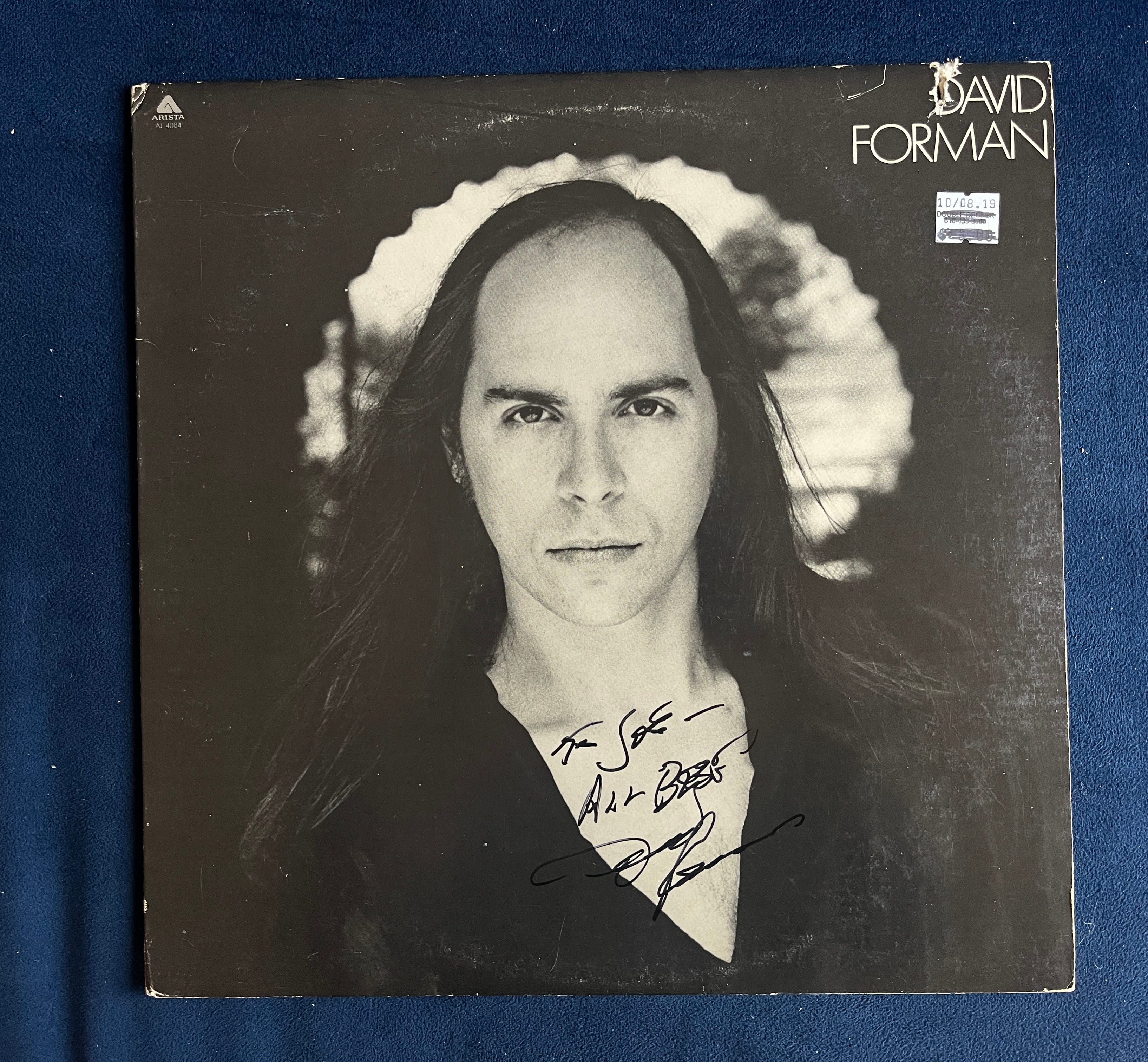
For decades, David Forman was hiding in plain sight. His only major-label album, recorded for Arista in 1976, had become a staple of thrift-shop dollar bins, as easy to come by as it was invisible to cultural memory. Maybe it was the album cover, featuring a soft-focus black-and-white portrait of a wan and serious artist. The record-buying public could hardly be blamed for assuming Forman was yet another sensitive singer-songwriter of the Dan Hill or Fogelberg variety. The vagaries of commercial packaging had virtually camouflaged David Forman to history. Which is strange considering that Rolling Stone magazine, at the peak of its critical influence in the mid-1970s, had declared David Forman a songwriter on the same level as Bruce Springsteen, Warren Zevon and Tom Waits. His singing was compared to Curtis Mayfield’s and Smokey Robinson’s. His album was roundly praised as “an artistic success.” David Forman was a critic’s darling—before disappearing.
As it happens, vinyl obscurities are the stock in trade of a listening group my friends and I formed a few years ago to discover outliers like Forman in the dregs of the bargain bins. When one of us procured Forman’s Arista LP and dropped the needle on the first track, “Dream of a Child,” the collective reaction was immediate and unanimous: “Where has this guy been all of our lives?” The blue-eyed soul vocals, the gorgeously melancholic piano, the oddly specific lyrics name-checking Philip Marlowe and Brenda Lee, the spare R&B production by Joel Dorn—a name we knew from classic mid-’60s Atlantic Records cuts—David Forman seemed algorithmically targeted to our tastes. We lunged for our search engines.
A fortuitous detail emerged: David Forman lived only a half-hour from my house in the Hudson Valley of New York. The photographer Tim Davis, a catalyzing force of our listening group, screwed up the courage to email David and ask him out to lunch that same week.
David Forman!!! I have had the exquisite privilege of listening to your solo album twelve times in the last week … Though prone to hyperbole, I am not exaggerating when I say that it is one of the most extraordinary records I have ever heard. It is as if Donny Hathaway somehow fused to Randy Newman, or Al Green to Tom Waits, but with more feeling. Everything about the songwriting moves me, and the performances are just ecstatically perfect.
David wrote back:
Well, Jeez! Are you sure you wanna meet me? Such an encounter can only be a disappointment. I kid, I kid. As Rickles would say, I kid because I love, I love. By the way, anybody who likes that record THAT MUCH must be crazy. So I’m scared.
When Forman showed up at a local lunch spot—sporting a soul patch, long hair tucked into a newsboy cap, and a distinct Brooklyn accent—David’s voluble personality, robust appetite for rare steak, and easygoing humor immediately put us at ease. We gushed with questions and Forman filled in the blanks: He’d been singing doo-wop since 14, developed his blue-eyed soul style performing with Aaron Neville, and had sung a hugely famous advertising jingle in the early 1980s (“Tum tum-tum-tum TUUUUUMS!”). That starkly serious cover photograph on his Arista album? Forman had a toothache that day and couldn’t smile. Record mogul Clive Davis, bafflingly, had wanted Forman to be the next Barry Manilow.
We were also eager to confirm an online rumor: Was it true that Forman recorded a second record for Arista in 1977, produced by none other than Jack Nitzsche? The storied arranger and keyboardist had virtually invented Phil Spector’s Wall of Sound in the early ’60s, putting his fingerprints on classic recordings by the Ronettes, Jackie De Shannon, and the Righteous Brothers. He’d performed as a sideman to the Rolling Stones, produced Neil Young’s Harvest, scored the soundtrack to One Flew Over the Cuckoo’s Nest, and married Buffy Sainte Marie.
We had to know: Did this record exist?
“Yeah, I’ve got a copy at home,” David said casually between bites of steak. “You wanna hear it?”
⚡️
Hal Willner, the late musical director for Saturday Night Live, renowned curator and producer of artists like Lou Reed and Lucinda Williams, was clearing out his offices at 30 Rock in the early 2000s when he found a reel-to-reel copy of David Forman’s unreleased record on the shelves. Forman had sent it to Willner in 1977 and it had sat gathering dust, waiting for providence.
Forman digitized the album and shared it with a few friends, and then lost the original tapes in a move. But in March 2022, Forman brought a CD copy over to my house, where our listening group sat anxiously in front of the speakers.
The moment we heard the gigantic guitar riff ushering in the chorus of “Let It Go Now,” Forman’s falsetto rising through columns of angelic backup singers amid Jack Nitzsche’s cavernous production, we realized we were hearing something magical and new. As Tim Davis would later put it, the music sprung to life before us like “the first flight of a genetically revived pterodactyl.” Song after song, a treasure chest poured gold at our feet: “Who You Been Talking To,” a smokey, exquisite Motown groove; “A-Train Lady,” a subway soul serenade that had us snapping our fingers like hoods from West Side Story; “Little Asia,” a sphinxlike ballad of high cinematic intensity. Every song seemed to walk out of a fantasy of 1960s New York: the rolling R&B piano of “What Is So Wonderful”; the spoken-word art song of “Losing,” with its haunted downtown atmospherics; the achingly desperate ballad, “We Both Talk Too Much”; the Latin bounce of “Midnight Mambo” with the hilarious lyric “my Mama used to go/down on Perry Como”; and “30 Dollars,” a lurid back-alley come-on seemingly piped in from a James Ellroy novel:
Thirty dollars get you a room, boy
Get your breakfast at Ritchie’s Bar
Cockfight, peep show, live show
Anything you want
Anything you want
I got lost last night at the Plaza
And I ran like hell
To the Golden Key
Police that busted my partner
Took my last thirty dollars from me
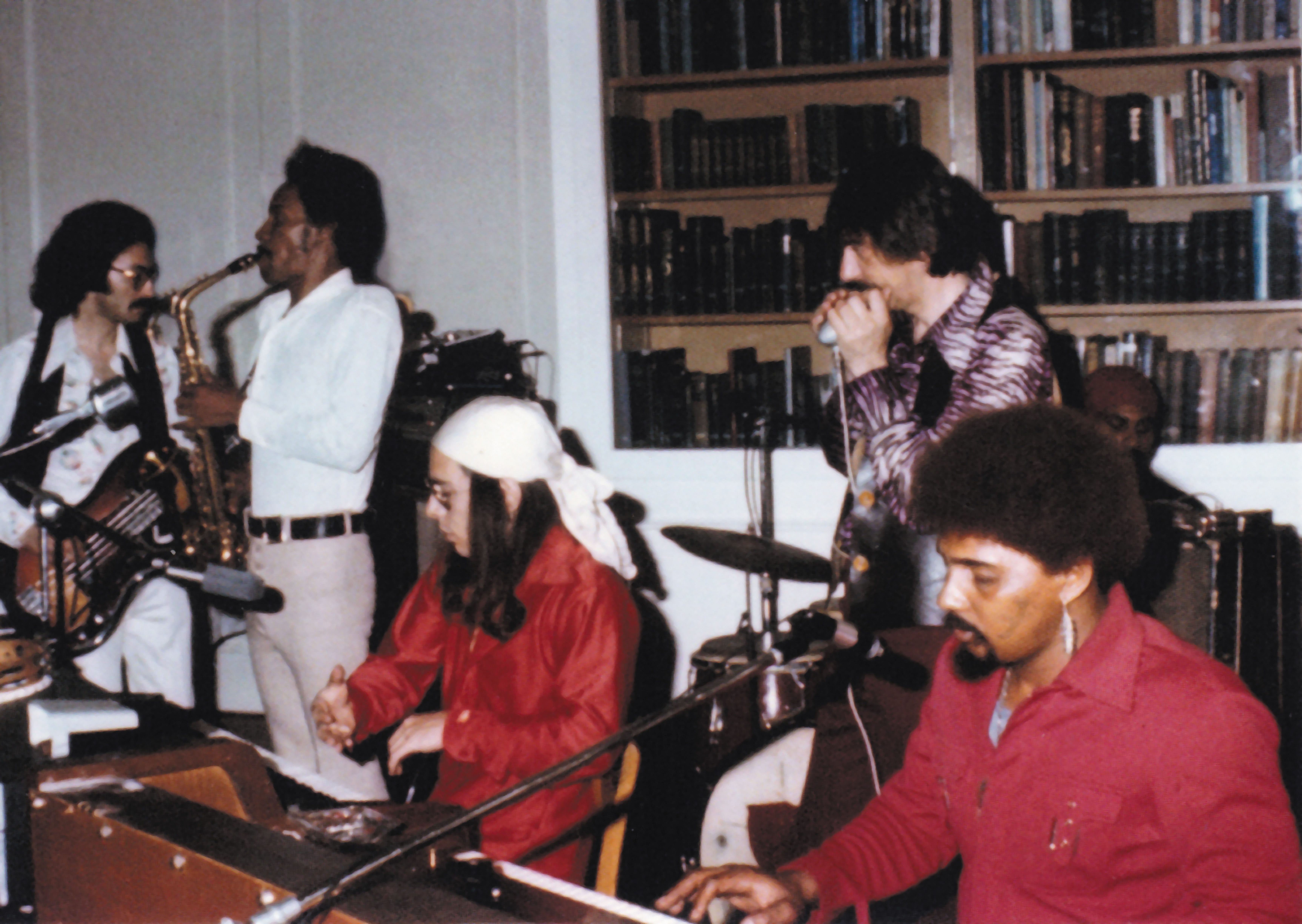
Forman casually named the boldfaced L.A. session players as they passed across the speakers: Ry Cooder, David Lindley, Fred Tackett, and Scott Matthews on guitars; Jim Keltner on drums; Tim Drummond on bass; Steve Douglas on saxophone; Earl Turbinton on bass clarinet; and Jack Nitzsche himself on Fender Rhodes.
We had stumbled into a fantastic and unlikely mix of—well, what was this? How to describe David Forman? You could point to influences: Randy Newman, Aaron Neville, Tom Waits, Marvin Gaye—yes, all of those, but none of them quite. We heard a kinship to the girl-group soul on Laura Nyro’s 1971 album Gonna Take a Miracle, with the LaBelle sisters, but with the persona and wit of a specific kind of literate street tough, a ’50s doo-wopper singing from the shadows of a 1970s noir.
If we were a little in shock, so was Forman. It was as if he was hearing his own record for the first time after having long considered it a personal failure, the demarcation point in which his life and music took a turn away from the possibility of chart-topping stardom.
The next day, I called my friend Lucas Van Lenten at High Moon Records, in Brooklyn, and said, “I’ve got something I want you to hear.”
⚡️
David Forman is a pure product of East New York, and Forest Hills, Queens. You can hear it in everything he sings. As music critic Stephen Holden would write of him: “From early childhood, David excelled in the pavement games that were the center of East New York’s polyglot kid culture, while the Orthodox Jewish schooling he received until the sixth grade would eventually manifest its influence in mythically inspired song lyrics.”
Forman’s music tastes ran from doo-wop and the Brill Building tunesmiths, to R&B groups like the Ronettes, the Crystals, the Shangri-Las, the Drifters, and the Coasters. At age 14, he sang lead in a group called the Opals that performed doo-wop ballads, which formed Forman’s essential musical character. At Forest Hills High School, in Queens, Forman met David Levine, a poet who was to become Forman’s years-long songwriting collaborator. “He’s the guy who made me think all of this was possible,” says Forman. “He was the class poet in high school.”
Levine was eccentric and brainy and his lyrics weren’t obvious rock-and-roll material, but Forman saw potential. Levine’s mother was the first Southerner Forman had ever met and she fanned Forman’s imagination. “His mom was from Louisiana and this blew my mind,” he recounts. “I only knew Jews from the Pale, but Joy Levine spoke with a melodic drawl.”
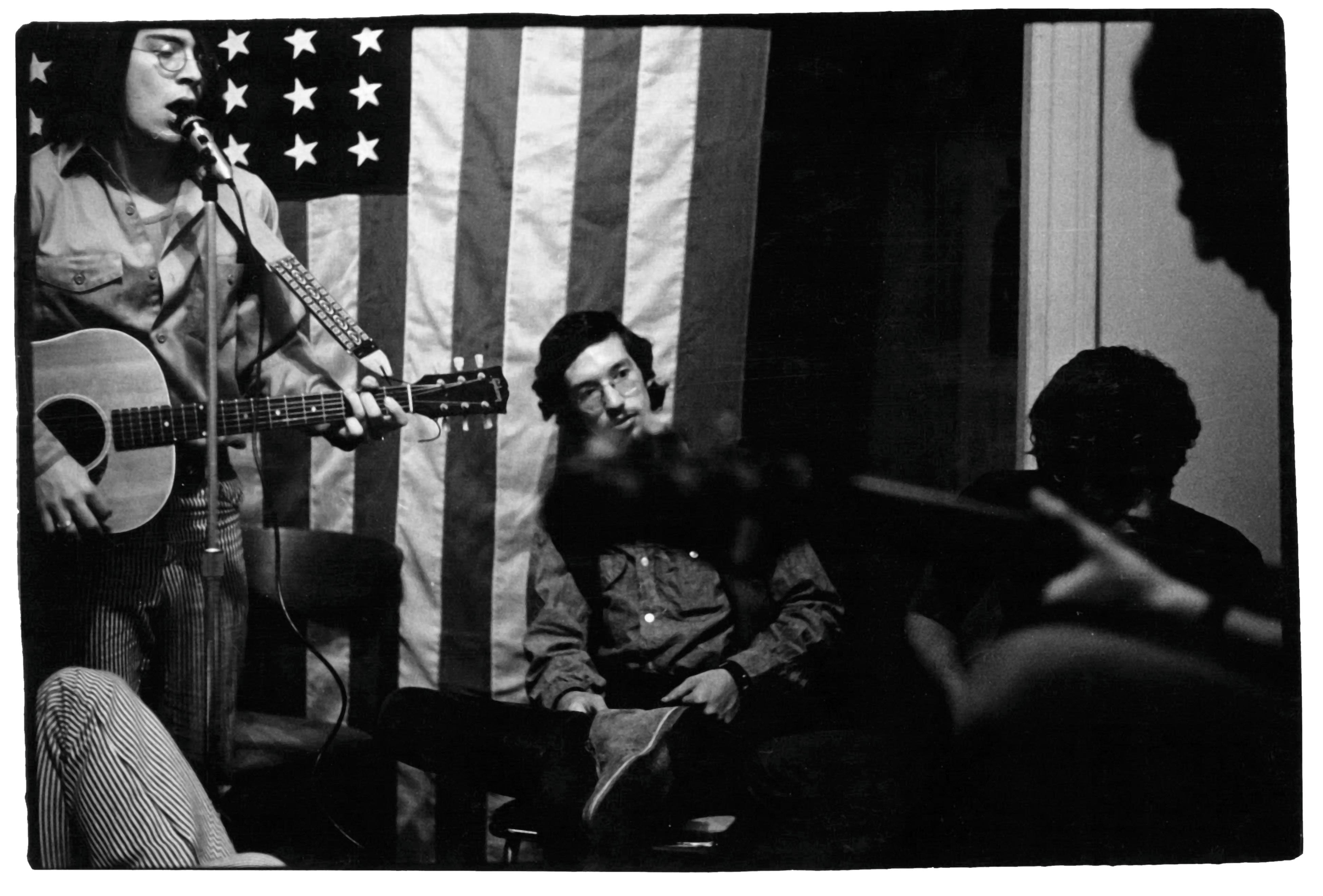
Levine describes his partnership with Forman as a balancing act. “Forman is brilliant without being especially bookish,” he says. “I am bookish without being especially brilliant. So we complement each other pretty well.”
In 1967, the two co-wrote a simple heartbreak ballad called “Angela’s Home” and recorded it at a tiny studio on Broadway in Manhattan. The demo didn’t lead to anything but it put wind in their sails. One day in 1969, Levine showed up with complete lyrics for a song called “Sleeping on Her Doorstep” and Forman set it to a melody reminiscent of “Lay Lady Lay.” They realized they were finally onto something. “We’d recently heard some Judy Collins records that featured songs by Joni Mitchell and Leonard Cohen, so I thought this could be a way into a poetic-type writing collaboration,” Forman says. “I didn’t imagine the hours I’d spend watching him counting syllables on his fingers. Drove me nuts.”
The two were getting deep into the Band when they wrote what Forman considers their first truly successful song, “A-Train Lady,” a two-chord Drifters groove about the quintessential New York experience of seeing a beautiful woman on the subway, in his case while watching her “sipping on a lemon-lime” and “checking out my long hair.” (The song would sit on ice until Forman recorded it with Nitzsche for this album.)
One afternoon in 1970, Forman was hanging out in his Brooklyn apartment, listening to the Meters’ “Sissy Strut,” when the doorbell rang and a stranger appeared looking for a saxophone player named Morris, with whom Forman occasionally jammed. “Well,” said Forman, “Morris doesn’t live here, but he shows up occasionally. Who shall I say is calling?”
It was Charles Neville of the Neville Brothers.
“I said, ‘Oh my god, really? Well, come on in, Art and Cyril are on the turntable right now.’”
Later, Charles invited Forman to his house. But when Forman rang the bell, Aaron Neville popped his head out the window and glowered at him. At the time, Aaron and his brother Cyril were struggling with substance abuse. “We saw you pull up,” he told Forman, “and we were sure that that was the police.”
Before long, Forman was singing three-part harmonies with Aaron and Cyril—mainly doo-wop tunes. But they were also singing Forman’s originals, like “Rosalie,” about the struggles of a Vietnam vet returning to civilian life, which the brothers would make part of their sets in the 1970s. Forman regularly invited Aaron and Cyril to his apartment where they barbecued and jammed on the roof. Forman had a keyboard set up and Aaron showed Forman his “funky knuckle” playing style. Forman paid close attention to Aaron’s singing. “I mean, it’s just fucking mind-boggling to be in the same room when he’s just off-handedly ad-libbing and doing that melismatic thing,” he says. “It’s like sitting at the feet of the master.”
Forman, Aaron, and Cyril performed as a group at the Greenwich Yacht Club in Connecticut. “We got to do some gigs together and we sang some doo-wop stuff,” recalls Aaron, who says Forman was already “a real singer” before they met. “He already had it in his voice. He already had it.”
It was around this time that Forman briefly attended Hunter College, supporting himself as a production assistant on TV commercials and soap operas, typing out scripts for the teleprompters on As the World Turns and Edge of Night. He learned enough about operating set lights that he landed jobs on B-movies like I Drink Your Blood and Pound, the latter directed by Robert Downey Sr. In 1971, Downey hired Forman for a film called Greaser’s Palace, a countercultural Western about a song-and-dance man who gets amnesia and starts healing the sick in a saloon. Downey was dissatisfied with the designs for the saloon and Forman, with typical chutzpah, said, “Let me draw you something.” Downey liked Forman’s design and asked him to build it, putting him in charge of a crew of 40 guys in New Mexico. “I didn’t even know how unusual it was,” he says.
When Downey announced he was going to L.A. to interview composers for the soundtrack, Forman gave Downey a demo he’d made, including a version of “A-Train Lady,” and begged Downey to consider him. When Downey returned, he said, ‘Forman, you didn’t get the job,’” Forman recalls. “I said, ‘Who did?’ He says, ‘A guy named Jack Nitzsche.’ I said, ‘Well, you know, fine, if you’re gonna get beat out by somebody …’”
Downey had also cast Nitzsche in a small role in the film. When he showed up to set, Nitzsche couldn’t help but notice that Forman and his crew were listening to a cassette of the Ronettes’ greatest hits on repeat. Nitzsche had arranged much of it for Phil Spector. “Oh, you listen to this kind of stuff?” he asked.
Forman saw it as an opening, and asked Downey if he could become Nitzsche’s personal assistant. The director agreed.
“So that’s where I met Jack,” explains Forman.
⚡️
David Forman befriended Jack Nitzsche and learned to sing with Aaron Neville, but a series of bohemian misadventures would shape Forman’s artistry in unexpected ways.
On the set of a low-budget film, Forman had become acquainted with an unusual character named Charles Baxter, an erstwhile art director who wore dapper suits, drove a green Mercedes, and fancied himself an old-world bon vivant. Born in the 1930s, Baxter struck Forman as someone who had emerged from a more romantic age, with high-toned opinions on literature and architecture. He was also wired into New York’s older gay intelligentsia and took a shine to Forman. “He was sweet on me,” says Forman. “I was always batting him away. My friends used to introduce him to their friends as ‘David’s butler.’”
One day, Baxter was flipping through a copy of Yachting magazine and suggested Forman spend his earnings from Greaser’s Palace (on which Baxter had also worked until he was fired for overpaying for an antique chair) on a boat he saw advertised in the back pages, a gaff-rigged ketch called Diligence.
“I thought, Hmm, really? A boat?” recalls Forman. “You could go anywhere in the world. And that’s what I thought at the time. Not taking into account that I don’t know how to use it. And sea sickness.”
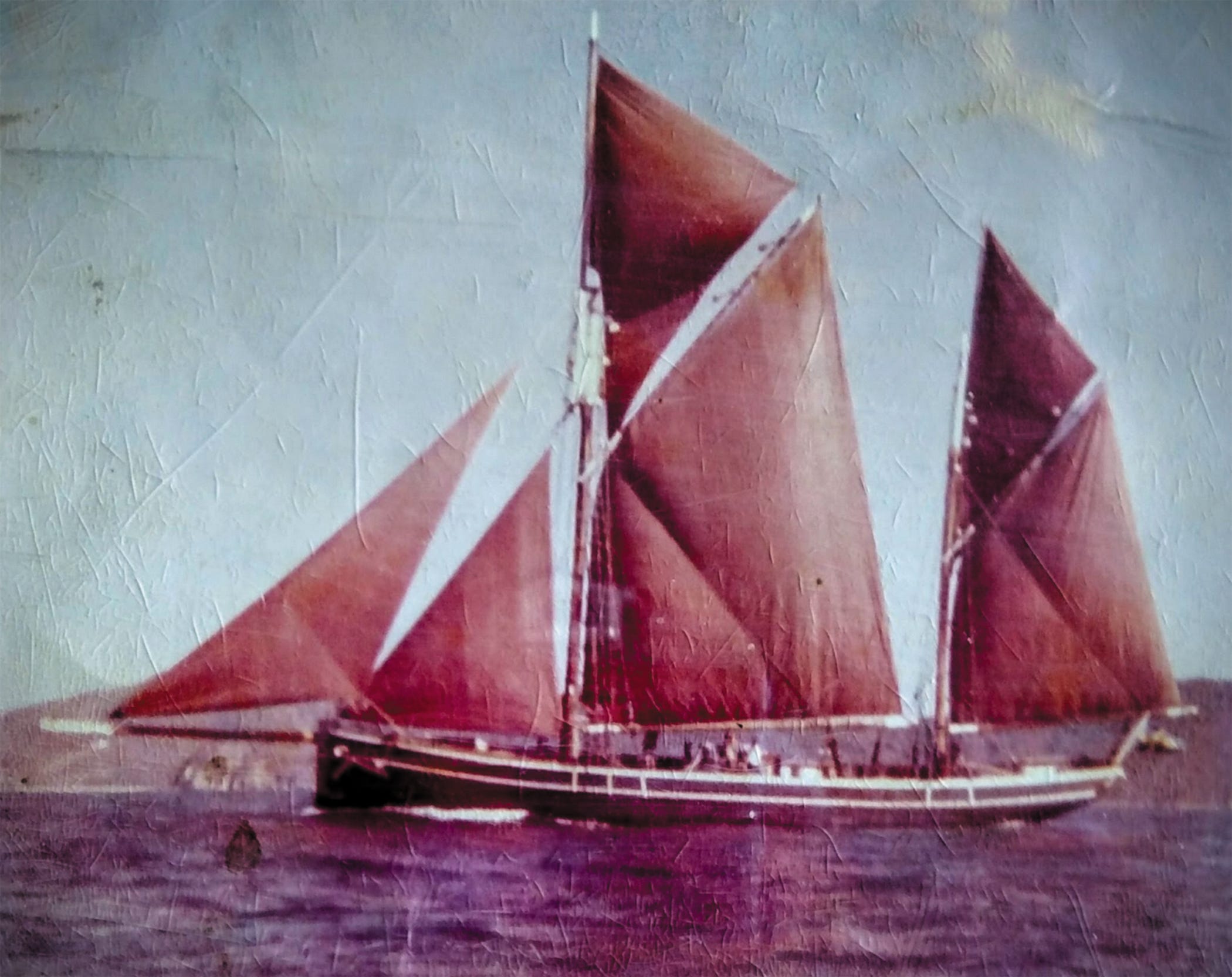
Forman paid $10,000 for Diligence, filled it with friends, including Baxter, the photographer Peter Berman (whose photographs appear on the cover of this album), and a couple of local beach bums with boating experience, and sailed to St. Thomas in the Caribbean. Chronic nausea cured Forman of sailing, but he and his crew lived on the boat and hung out at a harbor bar called Creeque Alley, where Forman manned the piano and sang songs like “Stand By Me” and “Will You Still Love Me Tomorrow?” But mainly, they partied. When his sister asked if she could visit him with her young son, Forman told her absolutely not. “It wasn’t a wholesome environment,” he says. In addition to ample cocaine and Quaaludes, he recalls, “there were fairly open and rampant sexcapades.”
After a year, Forman began wondering what he was doing with his life. It was 1973 and he was 24 years old. “I just thought, Am I going to do this record thing or not?”
Forman sold the boat and returned to New York, where Baxter offered to be Forman’s manager and concocted a fanciful company name riffing on their adventures: Caligula Amusements.
*
Forman was headed out of his Manhattan apartment for cigarettes one evening in 1974 when he ran into a neighbor in the elevator, a professional mime named Jim Moore, who was with the French acrobat and wire-walker, Philippe Petit. Later that evening, Forman was watching the news in his living room, which faced the Twin Towers to the south, when he put two and two together.
“There’s a feature on this guy who’s in town who just walked between the towers of Notre Dame Cathedral, and on the Sydney Harbor Bridge, and it was him,” Forman recounts. “I said, ‘Oh man, this guy’s here to walk between the towers. Yeah, no fucking doubt about it.’”
He ran into Petit again that same night. “You’re here to walk between the towers at the World Trade Center, aren’t you?” Forman asked him. “He’s like, ‘How did you know?’”
Forman helped Petit assemble a team of local bohemians who were crazy enough to get involved in the daredevil feat, including his high school buddy Alan Welner, who shot the arrow from one tower to the other to draw the steel cable across. Forman traveled with Petit to New Paltz, New York, to watch him practice on a wire between two trees. “It was like, ‘Yeah, this guy can’t fall,’” says Forman.
On the eve of August 7, 1974, Forman and his compatriots dressed up as handymen for the fictional “Fisher Industrial Fencing” and used fake IDs to enter the North Tower. Forman hauled a bale of steel cable to the 113th floor in preparation for Petit’s crossing. Forman left before Petit crossed; he was reluctant to wait on the roof until 4 a.m. when the plan would get underway, and with it, the inevitability of arrest and jail time.
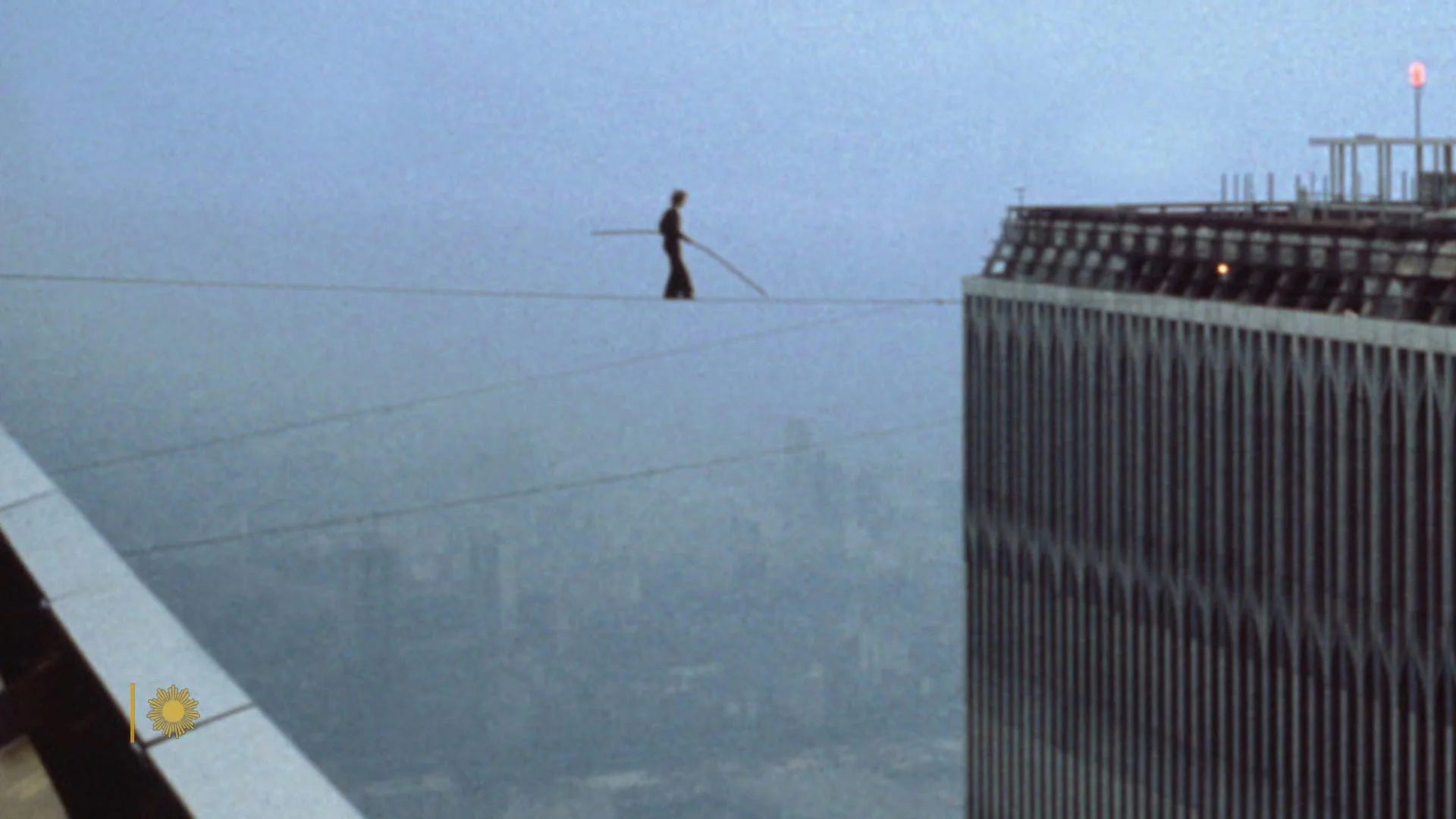
In his book, Petit changed Forman’s name to Donald and put black bars over his eyes in photographs, ostensibly to protect him from criminal liability. It wasn’t until the 2008 documentary Man on Wire that Forman’s name would emerge as party to the one of the most iconic daredevil feats of the 20th century.
That same week, David Forman went to visit a sculptor friend living in his building, Janet Harold, who asked him an unusual question: Did he know as a child that he would grow up to become an artist? Forman remembered setting nursery rhymes to music as a boy, and making up his own songs. And Danny Kaye, Phil Silvers, and Steve Lawrence were from his Brooklyn neighborhood, so Forman saw how song and dance could be a plausible trade. When he returned to his apartment after the visit with Harold, Forman sat at the piano and wrote “Dream of a Child” in its entirety, only changing one word later. It was Forman’s creative breakthrough as a writer and the lead track on his first album, which would feature, on the back cover, an oblique clue to its origins: a photograph of Forman standing against a fog bank, the Twin Towers faintly visible behind him.
⚡️
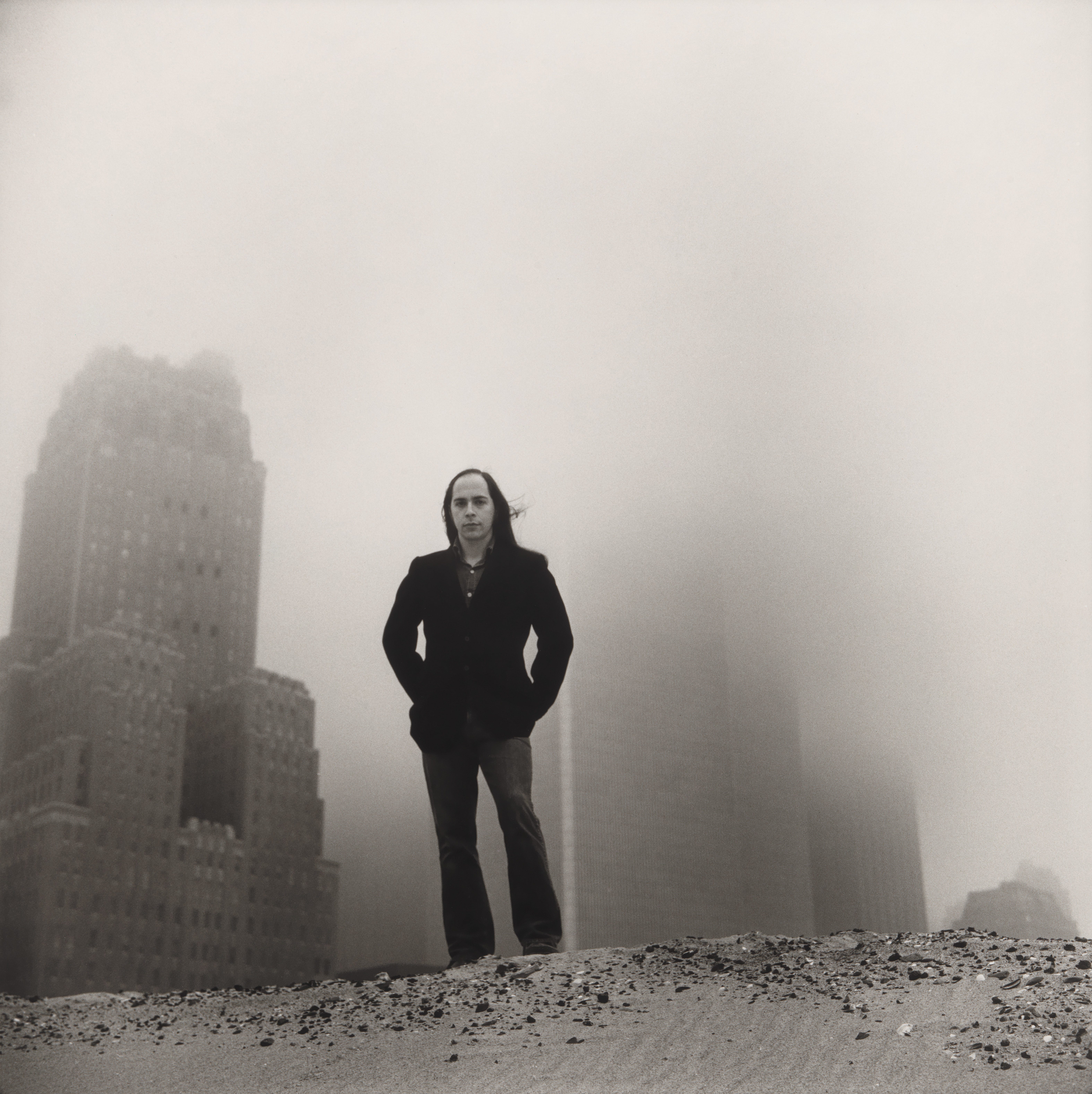
Forman first met photographer Peter Hujar at a rooftop party in 1974, through Charles Baxter. Hujar invited Forman to a house on Fire Island and photographed him, beginning a years-long series of photo sessions. “Hujar was the quintessential portraitist of downtown New York in that moment,” says Joel Smith, who curated a traveling exhibition of Hujar’s work for the Morgan Library in New York, called Speed of Life, and first brought Forman’s LP to our listening club. “He had an uncanny knack for photographing everyone who was anyone before they were someone.”
Forman would join the trans actress and Warhol superstar Candy Darling, and writers Susan Sontag, William Burroughs, and Fran Lebowitz on Hujar’s list of iconic subjects—though Hujar’s own renown would come after his death from AIDS-related pneumonia in 1987. In addition to the Twin Towers image on the back of Forman’s first album, and a close-up portrait on its inner sleeve, Hujar took the photograph we are presenting here for the first time: David Forman in Hujar’s East 12th Street studio in 1977.
The same year that Forman involved himself with Philippe Petit, he recorded a rough demo of improvised songs and jams backed in part by the Neville brothers. Bell Records—the New York label that put out “I’m Your Puppet” by James and Bobby Purify—bought the rights to the demo for $5,000 with an eye toward re-recording the songs in a studio, this time with Bernard Purdie on drums and Will Lee on bass. But Forman couldn’t re-capture the magic of the demo and Bell only pressed a few copies of a 45 rpm single that quickly vanished. (Forman was thankful; he disliked how it sounded.)
Forman befriended David Horowitz, the producer who oversaw the Bell recordings. Horowitz saw potential in Forman and helped him develop an arrangement for “Dream of a Child,” showing him how to open up the song with more sophisticated piano chords. It was Horowitz who introduced Forman to the 1972 Randy Newman album Sail Away, which expanded Forman’s idea of what he could do. Forman recorded another demo with Horowitz and gave it to Stephen Holden, a prominent rock critic whose byline he’d seen in the Village Voice. Holden was working as an A&R man for RCA Records and championed Forman at the label. When RCA passed, Holden referred Forman to Rolling Stone rock critic Paul Nelson, who took Forman into the studio and recorded another demo of “Dream” at Mercury Records, this time with a synthesized string section. Nelson called Forman “one of my favorite artists,” but Mercury didn’t agree. “The label bosses looked at me like I was crazy and out of my mind,” says Forman. “And I said, ‘Well, now what am I supposed to do?’”
That’s when a stroke of fortune arrived: Stephen Holden’s old boss at RCA, Bob Feiden, had left to work for Clive Davis at Arista and was looking for new artists.
“I got a call on a Friday,” says Forman. “‘Hi, David, this is Bob Feiden. Clive Davis would like to see you.’ And that was it.”
⚡️
Forman dedicated his self-titled Arista album to actor Charles Laughton and boxer Sonny Liston—one tender, the other tough, the yin and yang of David Forman’s art. Arista’s promotional materials included an essay by Stephen Holden, who called Forman “one of the most gifted and original composer-performers of the Seventies.”
In Forman’s songs, elements of Leonard Cohen’s romantic pessimism coincide with Randy Newman-ish irony in a totally individual and unpredictable way, while Forman’s amazing voice … infuses his material with the emotional volatility of a Smokey Robinson or a Marvin Gaye.
David Forman made the opening page of the Rolling Stone reviews section—premiere real estate in 1970s rock and roll. Dave Marsh, the magazine’s top critic, announced that Forman had joined a list of important songwriters that included Jackson Browne, Van Morrison, Bruce Springsteen, Tom Waits, and Warren Zevon. “It’s romantic and fantasy-laden without being the least bit innocent,” he wrote. “Any of the writers above might be fascinated by a pop hero like Mickey Mantle, but only Forman would have the audacity to imagine seducing Mantle’s wife [as he does in “Dream of a Child”].”
Marsh found it difficult to imagine Forman’s songs as FM radio hits, but “no matter what the verdict of the charts may be,” he concluded, “David Forman is an artistic success.”
David had high hopes for the album. And then he watched it disappear without a trace. When he performed for students at Maryland College in the summer of 1976, the audience ignored him and talked over his entire set, damaging his confidence. “I felt like I had not provided nearly enough musical energy to get a square deal from my listenership,” he says. “And the radio was no help. And I was no help for not writing radio-friendly songs.”
Forman took a year to absorb the disappointment. Contracted for another record, he vowed his next would have more animated material. It was Danny Goldberg, the rock manager and journalist, who suggested Jack Nitzsche as a producer. Goldberg had loved “Dream of a Child,” and he hired Nitzsche to produce the first album of a band he managed, the proto-punk Mink Deville, in 1977. Who better than Nitzsche, sideman to the Stones, producer of Neil Young, to help Forman make a proper rock-and-roll record?
Forman sent Nitzsche a demo tape of new material, including “Let It Go Now,” and a photo of himself Scotch-taped to the box to remind the producer that they’d met on the set of Greaser’s Palace. Nitzsche responded that of course he remembered him, but quipped, “Don’t send pictures of yourself.”
Clive Davis thought Nitzsche was a poor choice of producer. He didn’t understand why Forman would want a professional arranger to try producing a hit record in the year 1977, when slickly made confections from Boz Scaggs and the Bee Gees were topping the charts and Arista’s biggest-selling act was Melissa Manchester. But Forman insisted on Nitzsche—as he had insisted on Joel Dorn before him for his debut album. Davis, whose instinct was to support auteurs, gave Forman what he wanted.
When Forman arrived in Los Angeles in late summer of 1977—his first time on the West Coast—Arista sent a driver to pick him up and set him up in his own apartment. Nitzsche asked him to come to the set of a movie called Heroes, where Forman met Harrison Ford and Ry Cooder, who was going to play on Forman’s record. Forman was dazzled. They all went to lunch at the famed Hollywood diner, Musso and Frank. The next day, August 16, 1977, Forman went to Nitzsche’s house, where they plotted arrangements for his songs. Forman and Nitzsche were still sketching out the album in his living room when they heard the news that Elvis Presley had died in Memphis.
From the start, Forman was worried that he’d blown all his creative juice on the first record. He’d arrived with only a handful of completed songs—most of them co-written with David Levine—with sketches for others, like “Little Asia,” with a lyric by Brian Cullman. “Thirty Dollars” used lines and images cobbled together from letters Levine had written to Forman from Greece during his travels in the summer of 1969. “You know, ‘I ran like hell to the Golden Key’—the Golden Key was in fact a bar in Greece,” says Forman. “So there was a lot of his European adventures in it. He wrote me a thing that said, ‘I got lost last night in the placa’ and I said, ‘I don’t want to say the placa. Can I just say the plaza?’ That was all tough and right. When I got it to Jack, he liked it. I was surprised because I didn’t think much of it.”
Levine says he and Forman produced the album’s material at “a furious rate, making the second album much more of a real collaboration than anything else we’ve ever done.”
When the session started at the Sound Factory on Selma Avenue in Hollywood, Forman felt like he was walking his own kind of high wire. The recording was overseen by Dave Hassinger, who had engineered albums by the Rolling Stones and Frank Sinatra. Forman was awestruck by Nitzsche’s crack session men, especially drummer Jim Keltner, who had played with John Lennon and Bob Dylan. “Jack was set up with a Fender Rhodes next to me,” says Forman. “Just having him there was calming.”
Nitzsche knew what he wanted, going so far as to write out the bass clarinet solo on “A-Train Lady,” but he also let his session men invent their own parts on the spot, resulting in the dense and woven arrangements for which he was known. Starting with “Let It Go Now,” which they recorded on the first day of the session, the songs were taped live with the band playing together—the backup singers and strings by Sid Sharp and the Hollywood Strings were overdubbed later. (An exception was “Thirty Dollars,” for which Forman dubbed in Hammond organ and 12-string acoustic guitar.)
Nitzsche, as was his wont, employed a wall of guitarists, including Ry Cooder, David Lindley, Scott Matthews (whose 1959 Airline guitar is heard on “Let It Go Now”), and Fred Tackett from Little Feat. Cooder showed up with multiple guitars, including a Colombian tiple that allowed him to play three octaves of arpeggios, which he did to beautiful effect on “Little Asia.”
The songs, recorded over a period of two weeks, impressed the sidemen and Forman’s confidence grew. “I told you he was a good artist,” Nitzsche was overheard telling the band.
Jim Keltner, who that same year played on records by Randy Newman and George Harrison, was blown away by Forman’s singing. “This guy should have been a massive star,” Keltner told me after hearing the album again. “His voice is incredible.”
When they finished, Nitzsche sent the tapes to Clive Davis, who called Forman into the offices at Arista. In the waiting room, Forman could hear Davis through the open doors of his conference room, talking to his record men and sounding out the opinions on a tape they’d just heard. “Clive is going around the room, saying ‘What do you think?’ with a mind to not put the record out,” says Forman. “I’m thinking, Shoo, this poor fuckin’ guy.”
“It was my record,” says Forman.
Davis said he didn’t hear a single, except maybe “Little Asia.” “Clive said to me, ‘This could be a hit song if it were produced correctly,’” recounts Forman. “I was horrified. I thought ‘Who You Been Talking To’ was the single.”
Bob Feiden called Forman afterward and said, “Clive has a very generous offer”: He wanted to give the record back to Forman to shop elsewhere. For a major label head to make that kind of offer was highly unusual, but Forman felt so defeated in that moment, he told Feiden, “I think you guys should eat it. Absorb the losses and write it off.”
Forman didn’t have the heart to suffer more rejection, to have to listen to a Capitol or Columbia executive tell him it wasn’t good enough, that his personal creations weren’t commercial. “Part of me was relieved. I don’t know how much more of this I could have taken anyway. The aspects of my trade that I thought were important had nothing to do with it. Nothing at all. [Feiden] said to me, ‘You don’t even know what a hit song is.’ That offended me.”
David Levine remembers the rejection “was just fucking horrible. It was a great fucking album.”
“I was mostly disappointed about what my relatives were going to say,” Forman says now. “‘What happened, Dave?’ I just shrugged.”
⚡️
Aaron Neville loved telling the story of playing a roadhouse in Texas in the mid-’70s where an increasingly displeased audience started throwing bottles at the chicken wire in front of the stage until the Brothers played Forman’s song “Rosalie,” which practically saved their lives.
If the suits didn’t get Forman’s music, other artists certainly did. Mink Deville would cover “A-Train Lady” on his 1978 album, Return to Magenta. The Neville Brothers’ 1978 debut, also produced by Jack Nitzsche, featured a Forman song called “If It Takes All Night.”
“He gave me ideas,” says Neville. “He recorded that song ‘One Fine Day’ [from Forman’s first album] and made me want to record it. I recorded it with Allen Toussaint. I dug the stuff he sent, like ‘Take Me to Heart,’” a song Neville recorded in 1992.
With his record deal over, Forman reluctantly turned to commercial music to support himself, composing and singing on TV and radio ads. His first client wanted somebody who sounded like Randy Newman. But it turned out Forman was uncannily good at crafting jingles. He recorded spots for Burger King, Polaroid, and, most famously, Tums. Unlike most record deals and band gigs, these jobs paid good money—sometimes even great money.
With the proceeds, Forman bought land in upstate New York, got married to a woman named Barbara Sebring, raised three daughters and a son, and continued writing and performing in rock-and-roll and doo-wop groups, most notably with his band Little Isidore and the Inquisitors. He frequently hosted Peter Hujar at his home, which became the site of some of the photographer’s best-known images: portraits of Forman’s goat, goose, and Arabian stallion, named Fatif al Sahar.
Forman’s music, however, started getting noticed again in 1995, when Marianne Faithfull covered “Losing”—introduced to her by Nitzsche. Three years later, Forman collaborated with members of ’80s hitmakers the Hooters and producer Rick Chertoff on a concept album called Largo, about Dvořák’s journey to America, which, in addition to Forman, featured Taj Mahal, Levon Helm, Garth Hudson, Joan Osborne, the Chieftains, Carole King, Cyndi Lauper, and Willie Nile.
Around the year 2000, Forman received a phone call from Nitzsche, who he’d heard from only sporadically since the 1970s. The famed producer wanted to discuss forming a music partnership. Forman was thrilled until he realized Nitzsche was struggling with a decade-long heroin addiction and would require ample handholding. After spending time in a detox facility in Mexico, Nitzsche showed up in New York with no place to stay, blind in one eye, and ill-prepared to work on a record he’d agreed to produce for an up-and-coming indie rock band, Mercury Rev. Forman put him up in his sister-in-law’s apartment in Manhattan, where Nitzsche lay on a futon and chain-smoked day and night. After seeing Nitzsche attempt to score drugs on the corner of Ninth Avenue (wearing “his little Borsalino with a pheasant feather on it”), Forman invited him to his country house in upstate New York hoping to keep him out of trouble. “I bring him up and I can see him itching,” he recalls. “All he wants is to get high.”
One night, Nitzsche got drunk on wine and fell down the stairs at three in the morning, banging his head repeatedly. “I could almost see the birds flying around his head,” says Forman, who whisked him to the hospital for an examination.
Forman put Nitzsche on an airplane home to Los Angeles the same week. Four days later, he got a call from Nitzsche’s business manager, crying hysterically, “He’s dying!” Nitzsche had begun using again and complained to Forman that he couldn’t breathe. “I kept thinking, ‘Oh Jack, for godssake,’” says Forman. “All I could say was, ‘I know.’”
Nitzsche died the same day of cardiac arrest from a bronchial infection, age 63.
Forman found it somewhat painful to revisit the Nitzsche record, not least because of the dark coda of the producer’s life, which had put Forman’s own mortality into bolder relief (Forman had suffered a heart attack in 1999). But the album also symbolized the dashed hopes of his younger self. Forman can be a harsh judge of his own work, and for years he was genuinely uncertain whether the record was any good. He had rewritten many of the lyrics in the intervening time. Was he just another victim of the crude and capricious music-biz machine, or was he fooling himself about the quality and value of his songs, his music, his life?
But Forman’s unreleased record for Arista is beyond just good—it is a revelation. “There are many singer-songwriters who released albums in the ’70s and ’80s that didn’t have radio hits but who had idiosyncratic artistry that found audiences and which are still cherished today,” says Danny Goldberg, who managed Rickie Lee Jones and Nirvana and ran three major labels over his career, including Atlantic Records. “Albums by Tom Waits, Elvis Costello, Joan Armatrading, Mickey Newbury and John Prine come to mind,” he says “The songwriting, production and singing on this ‘lost’ David Forman album are, to my ears, as good as the best work of those artists.”
There are also few record executives with better track records than Clive Davis, Goldberg points out, and Arista was in the business of producing pop hits. “But I am flabbergasted at the decision not to have released the album at all.”
Nearly five decades later, fate seems to be intervening, willing the album back into existence. Not long after we started the project of reviving this album, Jack Nitzsche’s son, Jack Jr., was clearing out his late father’s archive in Los Angeles and happened upon two tapes of Forman’s second album in the garage. They were rough mixes sequenced by Nitzsche himself. Jack Jr. mailed the tapes to Forman to use. It was these tapes that High Moon Records used as source material for the album we have titled Who You Been Talking To. (The exception is “Painted in a Corner,” which came from the Hal Willner tapes and was originally mastered by Dave Darlington.)
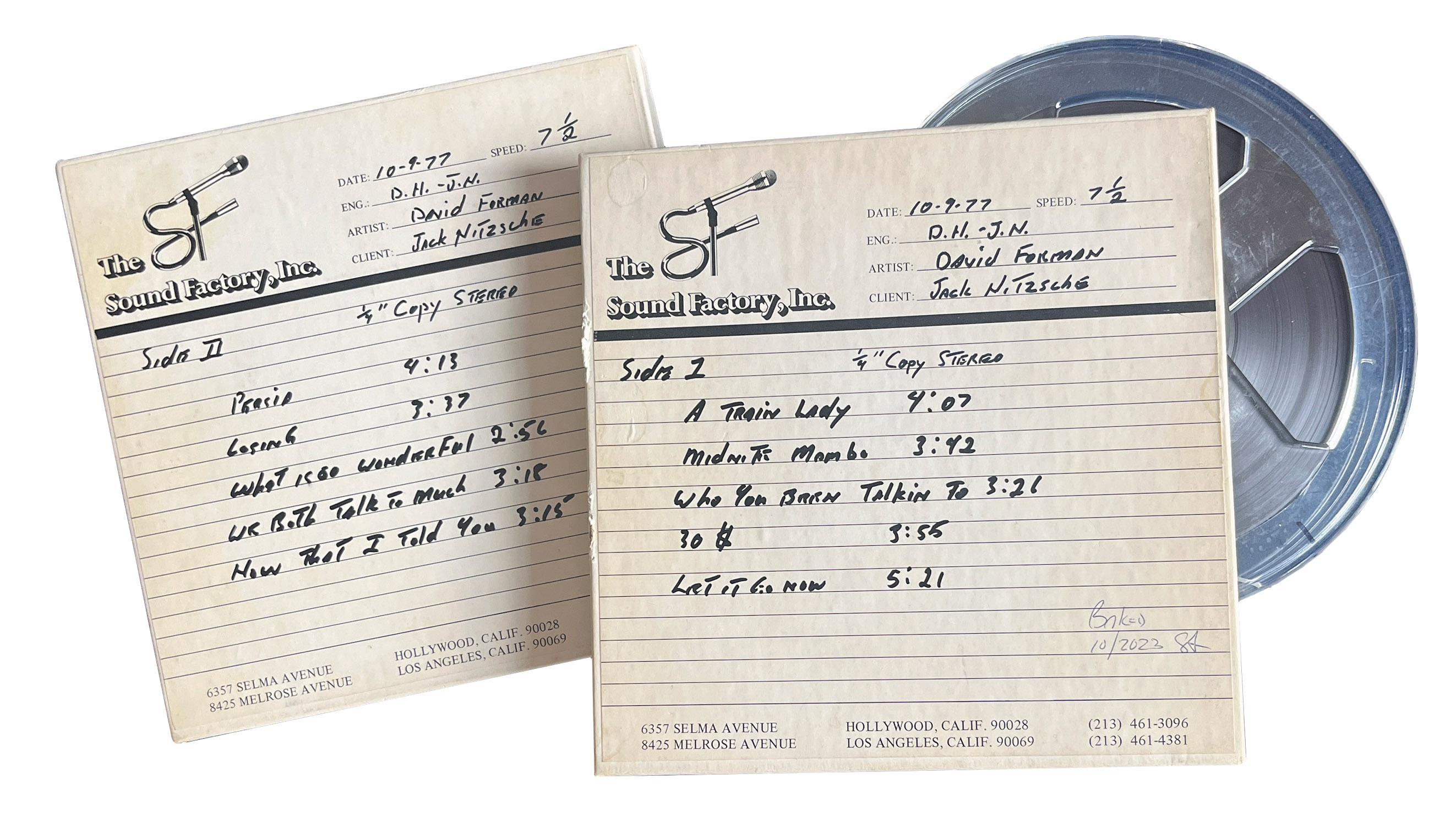
The album’s artwork and packaging was conceived to present the album as Arista might have released it in 1977, offering the full spectrum of Forman’s artistry, grit, humor and intelligence to the world. The sequence is roughly based on Nitzsche’s tapes, with “Who You Been Talking To”—the clear single—leading off the album. Steve Addabbo, who has remastered several of Bob Dylan’s boxed sets for Sony, mastered the tracks, spending considerable time bringing Forman’s vocals out from behind some of Nitzsche’s dense production. A veteran sideman himself, Addabbo marveled at Nitzsche’s old-school arrangements. “They don’t make records like this anymore,” he says.
If Who You Been Talking To had appeared in its time, perhaps it would have altered the course of Forman’s career, placed him in the pantheon of great singer-songwriters, alongside Tom Waits and Warren Zevon, where he would have rightfully fit. We will never know. The album comes to us like a long-distance telephone call from a 1977 that never was. But this record is also ideally tuned to our own times, when modern ears can appreciate the sophisticated individualism of Forman’s music, the peculiar mix of songcraft and persona, confession and soul. In the music of David Forman, we journey to a timeless New York of the imagination, lean on a lamppost with a bona fide street-corner laureate of Brooklyn, and dream.
⚡️