

Dad's Groove: Discovering my father's record collection
How a dusty box of hand-me-downs shaped my ear and expanded my sense of what music could be.

If you had wandered into my suburban New Jersey basement in 1986, here’s what you would have seen: a green-and-white Tunturi exercise bike frozen mid-ride; a Commodore 64 computer (probably loading Winter Games); hundreds of trophies for my dad’s athletic exploits in baseball, basketball, handball, golf, and, improbably, dancing; and, nestled among Brooklyn Eagles baseball jerseys and a sagging box of funky old clothes—including, inexplicably, two green-and-brown dashikis—was the cardboard box of dusty records.
They might as well have carried a record lung warning from the Surgeon General.
My dad didn’t have a big collection, but what he had was mostly excellent. Over the years, these records would move first to my bedroom, then follow me to college and into my first adult apartment, and eventually reside in the home I live in today.
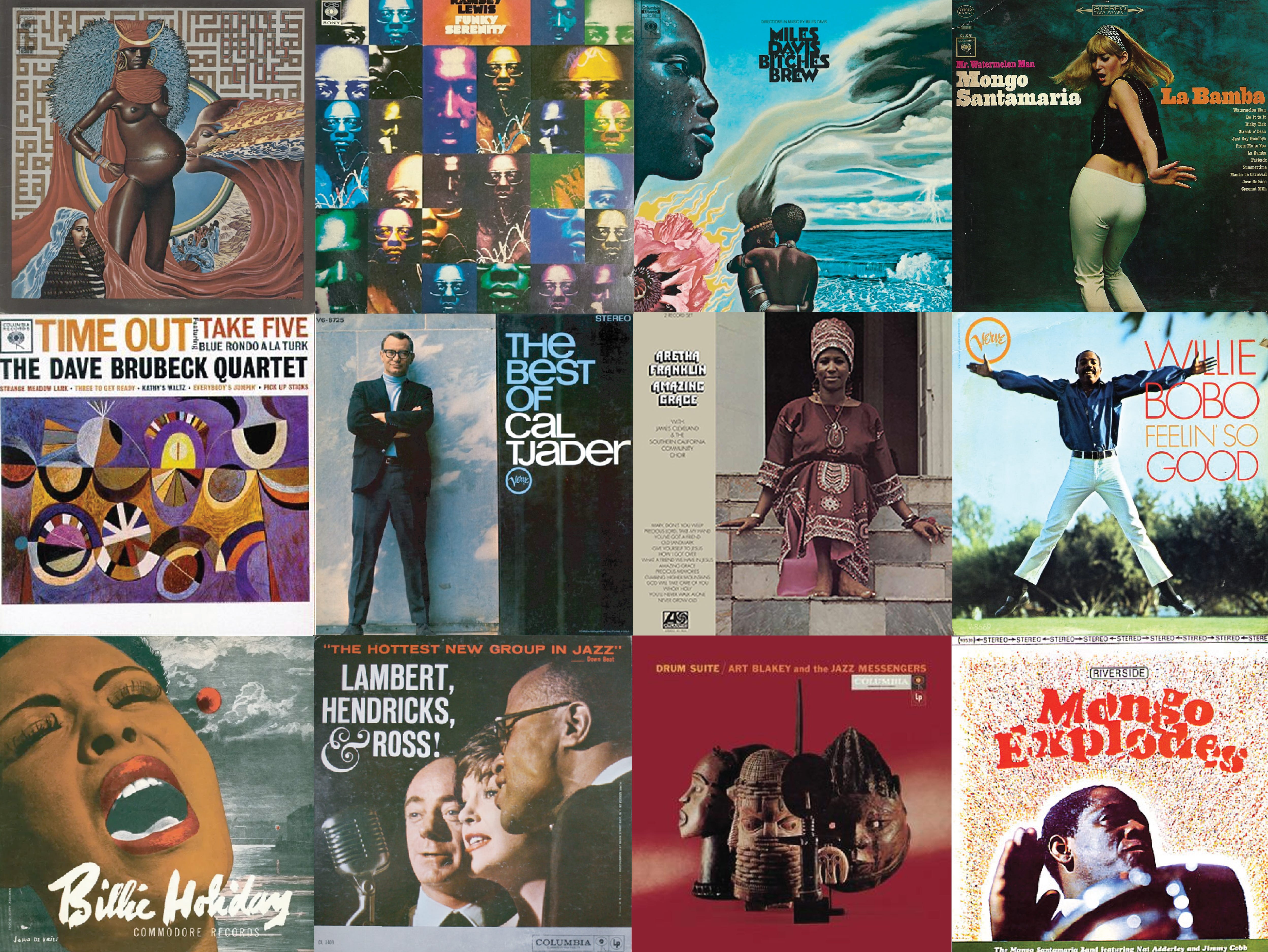
My dad, now 85, still lives with my mom in the same suburban New Jersey house where I grew up. A half-Italian, half-Lebanese Brooklyn kid who grew up around Atlantic Avenue and Court Street (the geographic and cultural intersection of the borough’s Italian and Lebanese communities), he’s a lifelong baseball nut who went to Hofstra on what was apparently the country’s first baseball scholarship. He played for the Brooklyn Eagles and even did a brief stint with the Pittsburgh Pirates before settling into a career as a risk manager at CBS, where he met my mom, became a father to my sister and me, and eventually moved the family to Bergen County, New Jersey.
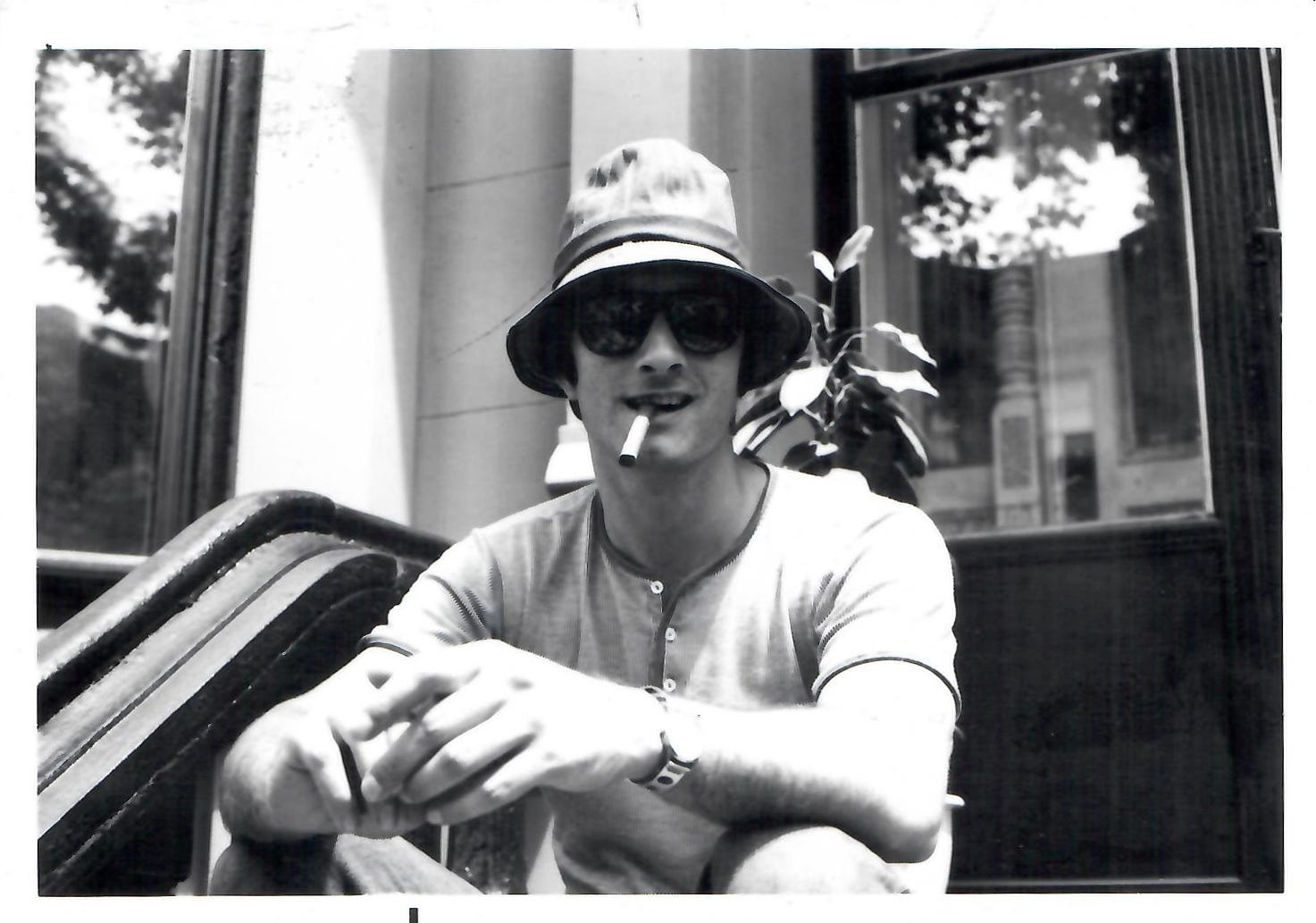
How an insurance man acquired these hip records is a little murky. When I asked him about the records recently, he gave me a string of half-remembered stories— dance contests, Greenwich Village nightclubs, a girlfriend who performed on The Tonight Show, late nights drinking with jazz musicians, and summer stock theater in Rhode Island. He dropped names like Madeline Kahn and James Garner. He was into rock & roll in the 1950’s (and even won a dance contest on The Ted Steele Show on channel 9), but then one day jazz started playing in the background and never really stopped. He said Dave Brubeck’s “Take Five” once helped him reconnect with a best friend, Ned. And the dashiki? “Your mom had one too. Must’ve been early ’70s, going to a party. Can’t remember where.”
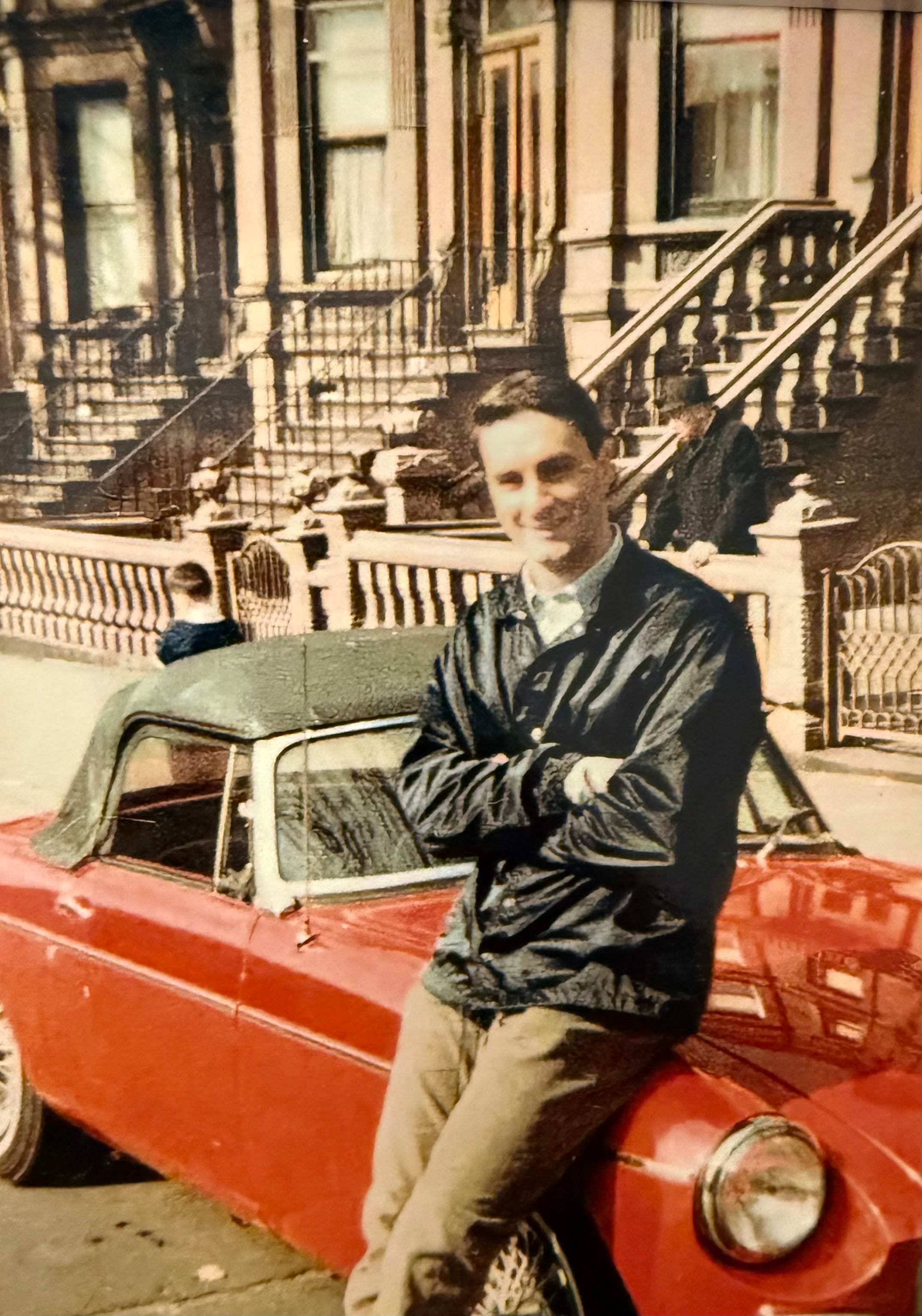
Through my 12-year-old eyes, these records looked old and not worth keeping. Ever since I’d heard Iron Maiden’s The Number of the Beast on my cousin’s Panasonic cassette player a few years earlier, I was all in on metal. So what did I want with this stuff?
But still the basement beckoned. Perusing the covers, the musicians all looked serious. They wore suits and glasses, so they must have been doing something important, no? The strange song titles, the cryptic liner notes, the curious cover art: they were clues to a larger world I didn’t yet understand.
And part of the draw was just that they were records. I was born in 1975, so while some of my earliest albums were on vinyl, cassettes were my primary medium. Dropping the needle and watching it land, hearing that faint crackle, this was a ritual that was fun even then.
Out of curiosity, I began listening to them through my dad’s Pioneer stereo system. At first, I didn’t get it. Some of it sounded corny (Lambert, Hendricks, and Ross, whom I now adore), and other things were just boring. But one record stopped me cold: Time Out by the Dave Brubeck Quartet.
A lot has been said about Time Out as a jazz gateway drug. It’s melodic. It’s groovy. It has a concept, but doesn’t feel conceptual. The songwriting is incredible. Paul Desmond sounds like an angel sent from jazz heaven. But what grabbed me was the drum solo in “Take Five.” I wasn’t a drummer at the time, but I think I have always been a rhythm‑first guy, and Joe Morello’s solo absolutely floored me. (Editor’s note: Morello also inspired Iron Maiden drummer Nicko McBrain to take up drums).
There’s a moment where Morello rolls on the snare and then slams the floor tom, letting it ring. Then again. And again. The reverb. The thud. The confidence to let the sound of one drum resonate like that—it felt borderline illicit. Not only had I never heard anything like that before, it never occurred to me that it could be done. It was also my first real encounter with swing and syncopation: ba‑DUM … ba‑DUM … ka‑THUNK ... tap‑tap‑THUD. It was physical. It was felt. I might have got up and danced. Hearing that track for the first time was a genuine musical epiphany; it was an experience I will never forget.
Another record that hit me was Bitches Brew. I didn’t necessarily understand what I was hearing, but I couldn’t stop listening. The swirl of electric pianos, the eerie, woody growl of Bennie Maupin’s bass clarinet, the echo and murk. It just sounded cool, strange and inviting. “Pharaoh’s Dance” was more like a collage than an actual song. It would start and stop, shift suddenly from half-time to double-time, then back again. Was it stitched together from fragments? It was loose and structureless, lacking verses, choruses, discernible melodies, or anything else I thought resembled a “song.” And yet somehow everyone was completely locked in. What were the rules? What secret did they all share? Did they all just agree on a vibe? I knew Miles Davis was the bandleader and the trumpet player, but I wondered why he barely played. It felt like everyone was operating on instinct, waiting for the right moment to contribute, speaking only when the spirit moved them. Was this jazz? I didn’t have the answers, but I liked meditating on the questions. I didn’t love it like I loved “Take Five” (not yet), but it pulled me in.
One more: “The Fakir” from the Cal Tjader record. Cringey as it sounds to say this now, it struck me at the time as … exotic. I imagined scenes of veiled dancers, spice markets, snake charmers, and other images conjured from record covers and film reels. Did my dad hear it that way, too? I’m too embarrassed to ask. On the other hand, my dad’s mother was from Lebanon, and while this fact doesn’t grant me a claim to the culture, I was always curious about it, and wonder now if I listened to it as a faint echo of our ancestry, however filtered it was through the American fascination with the “other.”
Musically, however, it’s a killer one-chord vamp, with a hypnotic pulse and modal drift that might have planted the seeds for my life-long obsession with one-chord songs (as documented in my “Keep the Change” post).
In retrospect, two things stand out to me about the collection. The first is that, with the exception of the Billie Holiday record (which was mainly a prop in a themed guest room with antiques from the 1940s), these records are all pretty groovy. Whether it was Ramsey Lewis’s electric swagger, Cal Tjader’s vibraphone smoothness, or the molten sprawl of Miles’s fusion albums, it was clear that my dad liked jazz that grooved (as do I). Maybe it was the late-night feel of the Latin after-hours clubs he name-dropped. Or the after-show hangs in the Village. Or the moments when everything was quiet, and music filled the room with motion.
The second is that this collection is a little journey around the world, maybe my dad’s way of getting out of Brooklyn without getting out of Brooklyn. He grew up in Carroll Gardens and Park Slope, but the music he collected—and still loves—came from elsewhere. There’s the Afro-Cuban syncopation in the Cal Tjader, of course, but also the slinky Latin soul of Feelin’ So Good by Willie Bobo and the percussion workouts of Mongo Santamaria’s La Bamba and Mongo Explodes, all of which feature Cuban grooves behind jazz improvisation. There’s the southern-influenced electric gospel of Amazing Grace. There’s the modal mystery in Miles’s Live Evil, which sounds like it’s tuning into spirits from faraway continents. Even the groove-forward Ramsey Lewis record (Funky Serenity) has a kind of pan-ethnic palette.
And then there’s Drum Suite by Art Blakey, an early experiment in merging hard bop with African percussion, Latin rhythm, and orchestral textures. It’s a wild, cinematic ride through multiple musical geographies, all contained on a single LP.
My dad’s interest in international, polyrhythmic grooves didn’t stop in the ‘60s or ‘70s either. Only in writing this did I recall that ten years ago, I made him a playlist full of contemporary tracks from around the world: Tuareg guitar jams, Ethio-jazz burners, desert blues, Afro-Cuban swing, etc. And he loved it (and hopefully still does!).
Clearly that dusty box of physical records shaped my ear and expanded my sense of what music could be and influenced me in ways I probably still don’t fully understand. I’m just grateful that my curiosity got the best of me and that I gave his records a spin. Thanks, Dad!
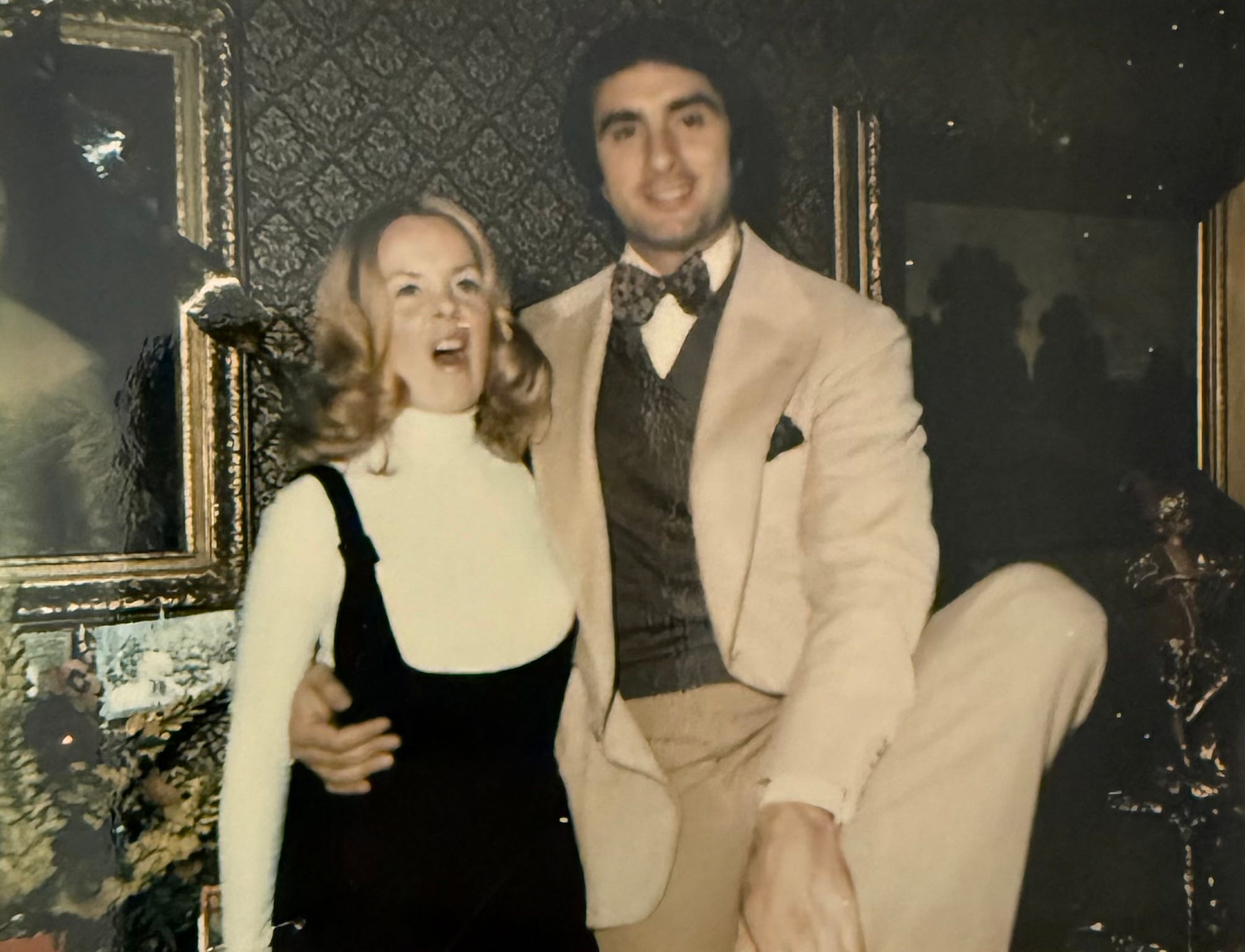
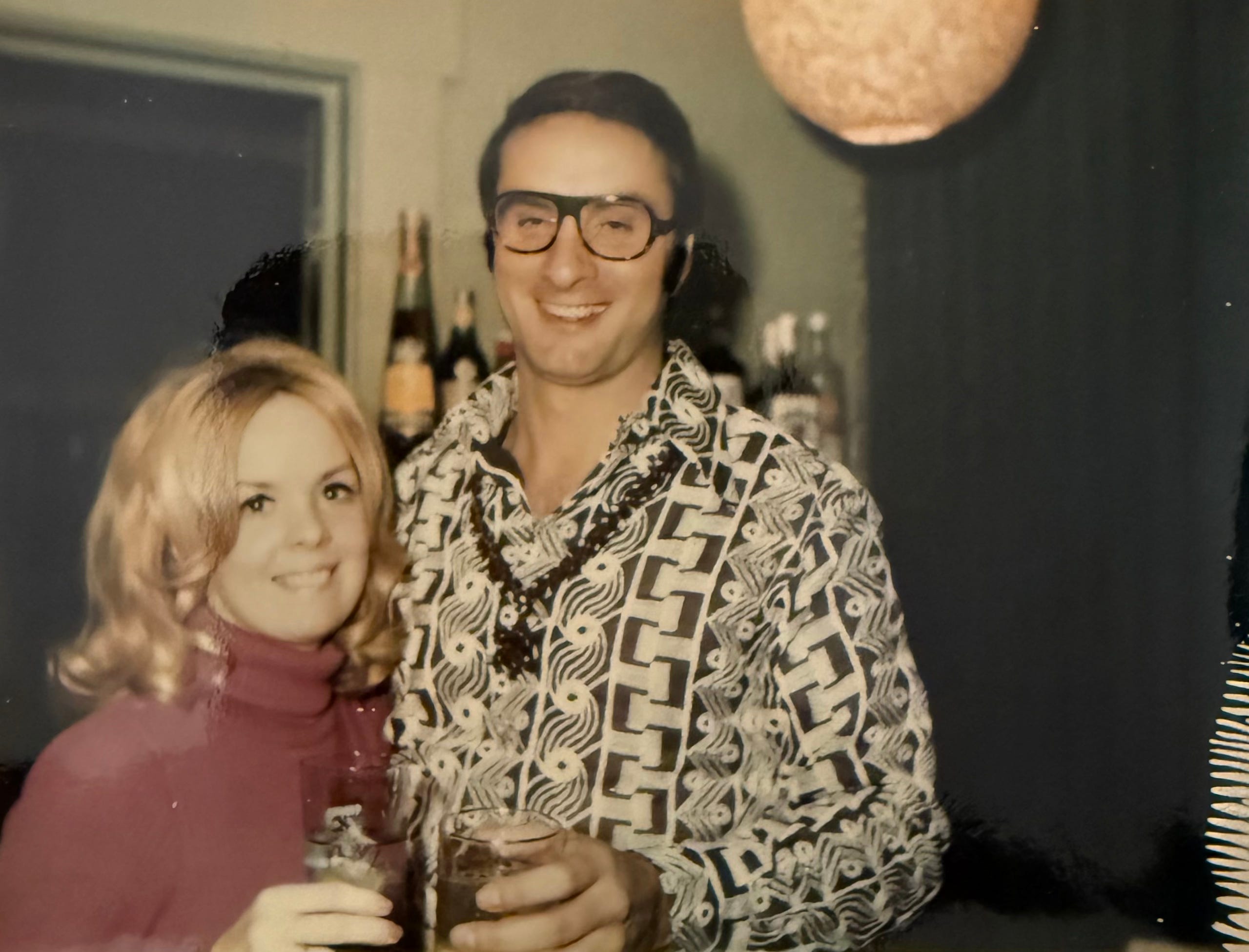
That is some Italo-Lebanese Glocken-Travel-Agent Funk right there.
I loved the captions for the photos. "Bitches Brew" changed my life. I didn't know music like that existed. It was my gateway to jazz, for better or for worse.