

Reflections on Duke
A favorite record and a lost book proposal.

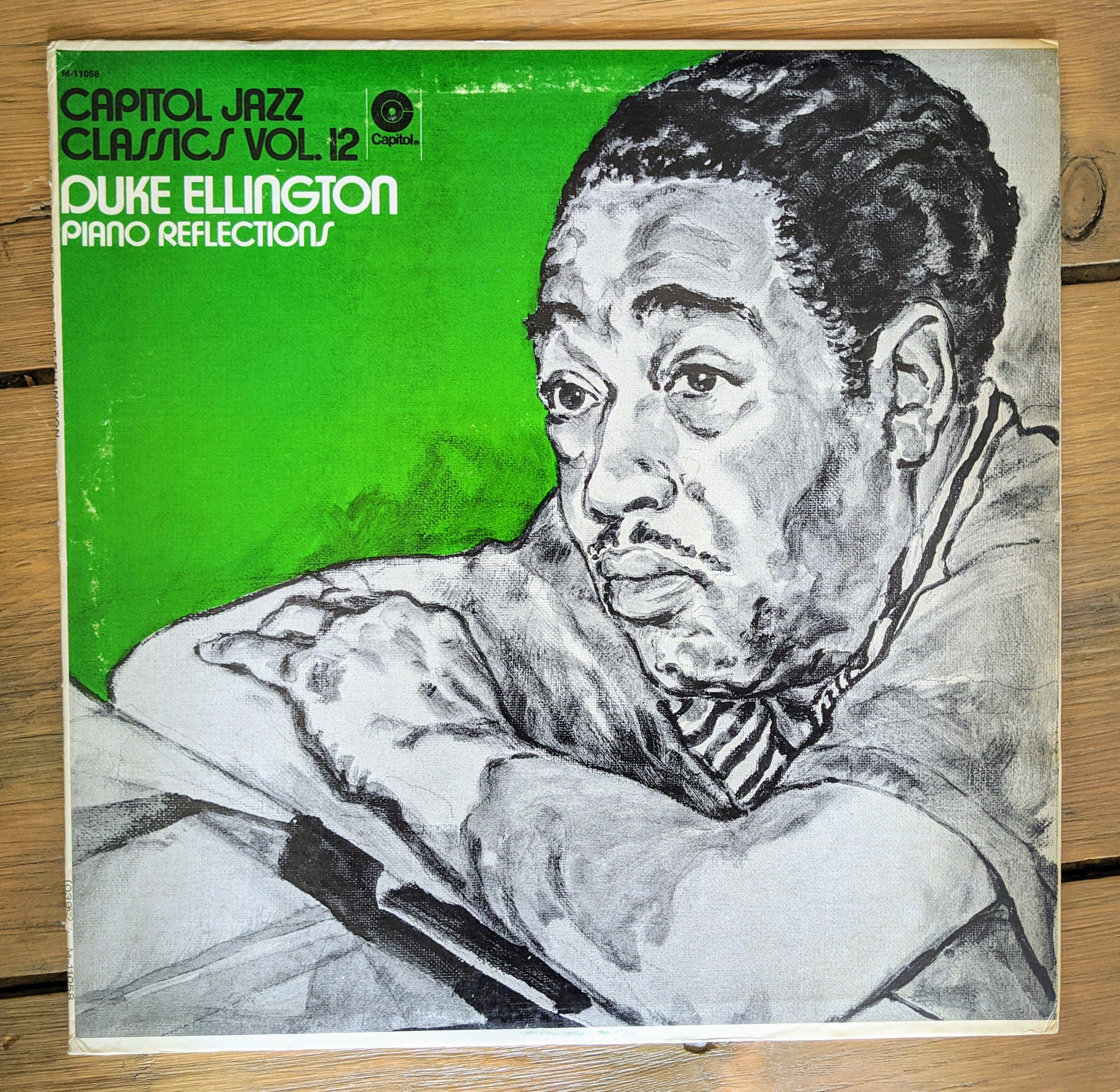
A few years ago, after my biography of Jann Wenner came out, I was casting about for a new book idea and decided my next subject was right in front of me—or rather, sitting right on my turntable.
In the early days of our longstanding record club, a friend named Ian Davis, a painter, had brought a copy of Duke Ellington’s Piano Reflections to my house and played it at the tail end of the evening. I was instantly enthralled by the intimacy and emotion of the playing, pausing a conversation to ask, “What’s this?”
I was already an Ellington fan, but I’d not listened to him strictly as a pianist. That album—a Capitol Classics reissue of The Duke Plays Ellington, from 1953—deepened my love, which became something like an obsession as I began collecting all of his records. I practically embedded myself inside Piano Reflections, buying up spare copies and handing them out to friends like party favors. I even listened to it on mushrooms once and came away with a singular thought: Here was the sound of radical confidence.
When I started cooking up the biography idea, I knew I was out of my depth and began poring over biographies, oral histories, university archives, and memoirs (two favorites: Mercer Ellington’s Duke Ellington In Person, and the posthumous Rifftide: The Life and Opinions of Papa Jo Jones), and sought counsel from the elders of the game. I met with Gary Giddins and Loren Schoenberg, both of whom graciously encouraged me. Loren even arranged meetings with Dan Morgenstern and Stanley Crouch (who was in a care facility at the time, nearing the end of his days). I also met with George Wein (Newport Jazz Festival founder and Ellington friend) and Nate Chinen (jazz critic and co-writer of Wein’s memoir), both of whom gave me great advice and de facto spiritual backing.
I was gathering strength.
Still, Piano Reflections felt like the most revealing source of all, more so than anything I’d read. Inspired by Geoff Dyer’s fictionalized accounts of jazz icons in But Beautiful: A Book About Jazz, I began to think that with enough research and novelistic brio, I could imagine my way into the room (Capital studios, Los Angeles, 1953) and unlock the Sphinx-like secrets of the Duke—score a virtual interview with him from the grave. Isn’t that what every biographer wants?
And thus this excerpt from a letter to my editors at Alfred A. Knopf:
My path to this idea flows directly from my years-long love of Ellington’s music. The 1953 album Piano Reflections is the muse that leads me here. Recorded at the lowest point in Ellington’s career, when he was 54 and out of vogue, it is both a solo sketchbook and a kind of diary. It is Duke Ellington at his most emotionally naked—the private joys and melancholies of a man at the crossroads of life and at the crossroads of the American century. In his danceful, hand-on-hip piano playing, you can hear the trace memories of long-ago Harlem revues, the implied steps of Mildred Dixon, the beautiful showgirl he fell in love with at the Cotton Club. In the slow saunter of “Things Ain’t What They Used to Be” or the pianistic tear drops of “Passion Flower,” intimations of the scar that runs down his left cheek, where wife Edna slashed him with a knife after discovering the affair. He swings, he promenades, he brags, he stubs out a cigarette in a slow smoke of regret—“Melancholia.” Here is the Duke Ellington that his lonely son Mercer heard behind closed doors after midnight on Edgecomb Avenue in Harlem’s Sugar Hill. Ellington reflects, remembers—“Retrospection”—and emerges renewed with “Kinda Dukish,” echoes of the time he stole his father’s wood-paneled Chandler motor car and roared through the night to Baltimore with the street hustler Black Bowie, prepared to demolish the poolhall with his still-imitative piano stylings. Dissonant chord-strikes against a chugging beat, church shouts done up in cubism, a call and a response and a grinning hello to Willie the Lion as the Duke casually invents James Brown, early rock and roll, the first inklings of hip hop. It’s the joyful, triumphant sound of radical confidence.
What’s revealed is the man I want to write about. Ellington’s music, which spans 50 years, is full of profound imagination and optimism, a world of fantasias, dreams, reveries, comedy, portraiture, landscapes, trains, birds, castles, cities, sunrises, rivers and women. It’s a Whitmanian vision of America as composed by a man whose grandfather was a slave in North Carolina. Ellington invents new dimensions in American freedom from the lungs of marginalized men blowing through European brass and reed instruments to a train rhythm. Ellington’s influence is immeasurable, rippling through Charles Mingus and John Coltrane, but also Ray Charles and Joni Mitchell and Willie Nelson and Prince and Janelle Monae. He is alive in Donald Glover and every hip-hop empire-builder. Every day we’re reminded that the long shadow of Ellington’s time is still with us (Glover: “Grandma told me/Get your money, black man”). In films from the 1940s, you can watch Ellington somberly conduct his orchestra of discrete men in tuxedoes and then, suddenly, shout out and pull a new sound from the air with a raised hand—huge, shocking, beautifully harmonized horns, a chromatic bouquet of indigos and azures. He smiles, casually tosses off a garland of piano and bids Johnny Hodges, sober as a priest, stand up and tell the whole story on his alto saxophone, a testimony in blue.
That’s Duke Ellington.
Alas, my Duke biography faced too many hurdles. For one, critic Terry Teachout had only recently published a biography, Duke. It was a relatively thorough and well-written account, but also, as Ethan Iverson recently argued in close detail, deeply problematic. It was clear by the end that Teachout had come to despise Ellington the man, calling his musical sophistication into question and judging his most ambitious works against European classical traditions, suggesting he was overrated. He found his character wanting, too, which, coming from a white, politically conservative critic, gave off the faint whiff of racism.
Over drinks one night, the late Sonny Mehta, legendary Knopf editor, gently observed that a Duke Ellington bio by a white non-jazz writer was liable to offend two constituencies: jazz critics and black people. I was, of course, neither. This was partly an acknowledgement of the politics of the moment, which I well understood as my biggest hill to climb. But more salient for Sonny, jazz books simply didn’t sell. I had tried pitching mine as a pop biography, a Great American Hero book, like Walter Isaacson’s bios of Einstein and Armstrong, but, ironically, it turns out Duke Ellington isn’t enough of a culture icon to move books on name recognition. And it’s hard to argue with publishers (as I did) that the reason the previous bios of Duke didn’t sell is that they were either lame or aimed too narrowly at jazz audiences.
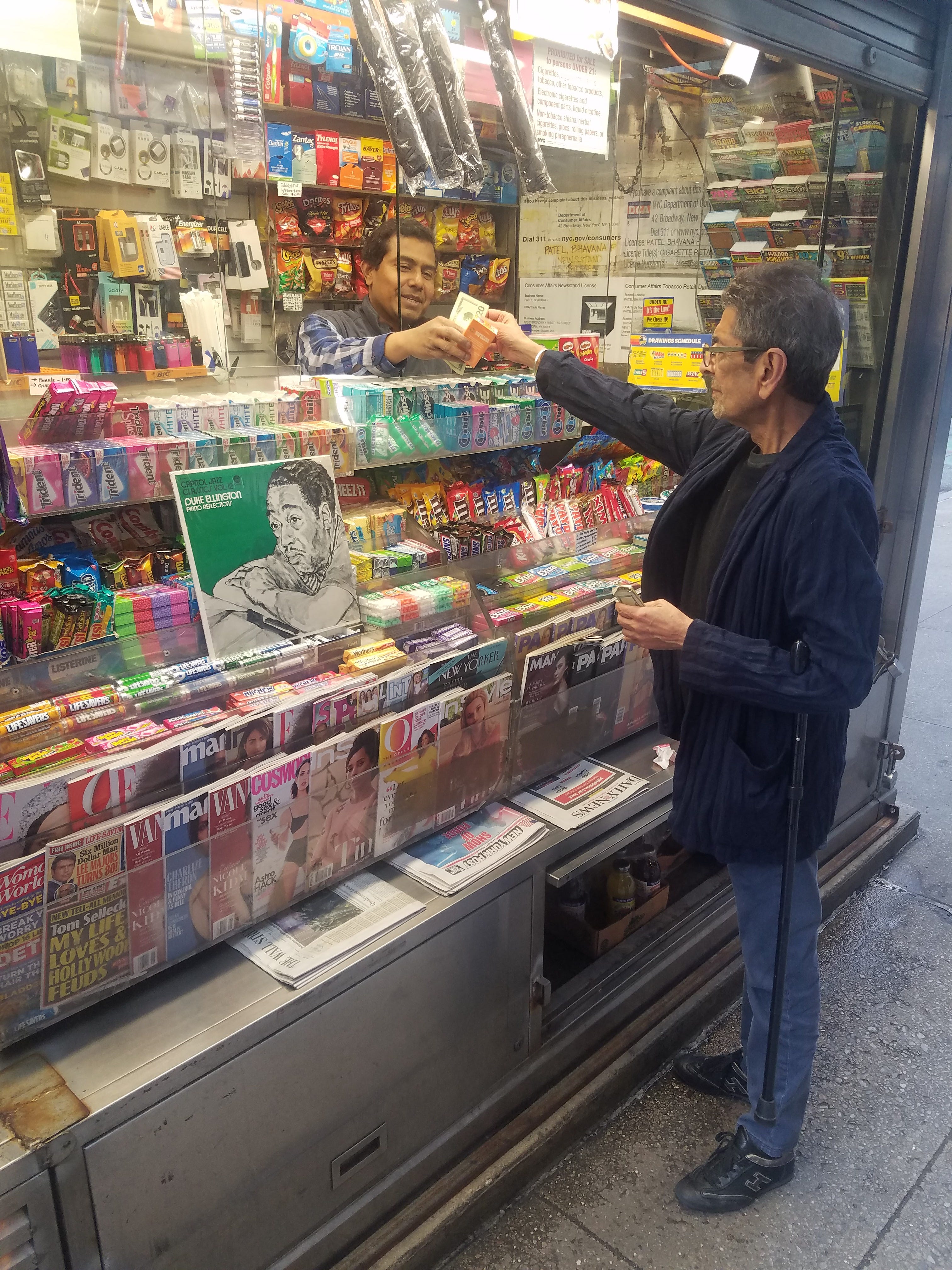
Sigh. I understood. And perhaps it was for the best. Maybe I would have made a fool of myself. Perhaps I would have regretted taking it up. I think Sonny feared I’d end up in some Robert Caro-like maze, obsessively trying to grope my way out of the Ellington crypt.
I still think I could have made a great book. And I still think a truly great Duke Ellington biography remains to be written. Possibly it never will be.
Well, we’ll always have Piano Reflections. And that’s a lot.
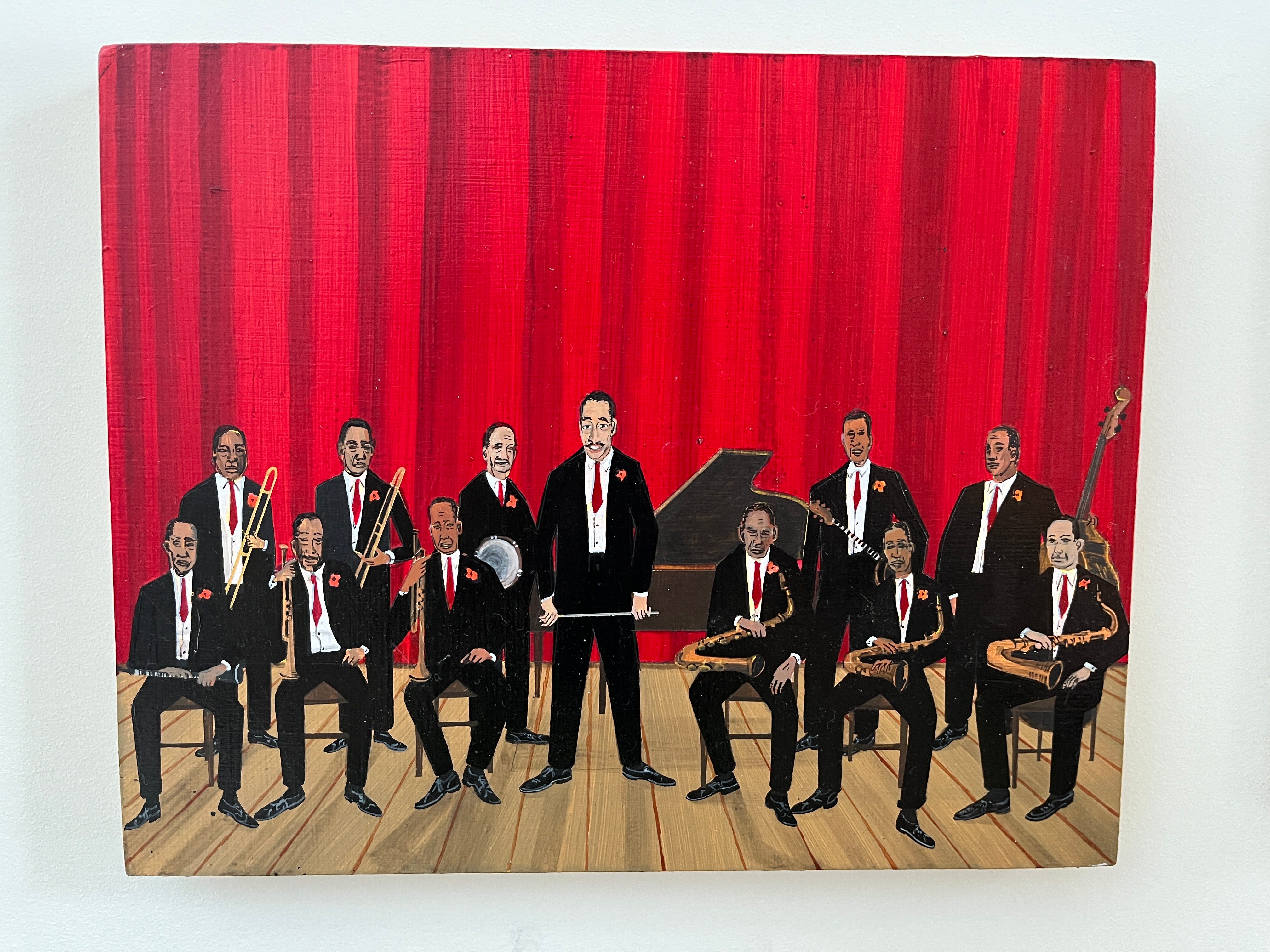
If nothing else, I did get a beautiful prize for my efforts: a painting of the late 1920s Duke Ellington Orchestra by my friend, Ian Davis. It hangs in my office today.
This essay is so good. Much appreciated. And thanks also for the mention of Geoff Dyer’s book. One Christmas, as a gift for my staff at Verve along with the bonus checks, I handed out copies of But Beautiful. I got some curious looks, but I wanted them to think about the music we were selling in an alternative way. I have no idea if any of the team read it, but hey, I tried. I have a small list of books on Jazz that are outside the mainstream of writing on the subject, and the Dyer is at the top. Cheers!
Regarding the track “All Too Soon” from this album, I wrote the following in 2020 for an end of year roundup of songs that represented the year’s experiences:
This year, on top of everything else, a close friend of mine died of cancer. It happened very quickly, with little time to process. He had been my editor for over a decade, deeply involved in my writing, a collaborator who had given me the confidence to find my own voice. He was also a gifted jazz pianist and music had always been our secret handshake as friends. As he lay in the hospital, I sent him a few songs to listen to on his ear buds. He was in and out of heavy medication and I could never be sure he listened, but I spent hours and hours one evening—as it turned out, his last—trying to think of songs that could convey the gravity of what I wanted to say to him. I tried to imagine a song that could bring comfort but also meaning, bind emotion and art into something like a goodbye and put a fine point on the profundity of life itself. I hoped against hope that a song—a song!—could somehow arrest his pain and eclipse the sorrow of death. This was a tall order — in truth, impossible, even absurd. Later I realized it was probably more for me than for him, a way to cope with the emotions of impending loss.
…..In the end, I sent him a Coleman Hawkins ballad, a Harry Nilsson song, and an Art Tatum-Ben Webster tune—but not the song I had wanted to send. Not this one. Ellington’s “All Too Soon,” I decided, was simply too on the nose—the way the title seemed to acknowledge that my friend was, in fact, about to die, which I knew was true (so did he) but could not bring myself to admit yet. It was too painful. Too soon. He was 62. It wasn’t until I saw him in person the next day that I was able to say a proper goodbye, one of the most profoundly painful experiences of my life. After he died, I played this song over and over again, to experience the emotions of the loss, but also the fragile beauty of life. It was an elegy and a prayer, a communion with my friend, a long goodbye at the edge of darkness.