

Five Totally Underrated Bargain-Bin Records
They're ubiquitous, they're cheap--and they're great!

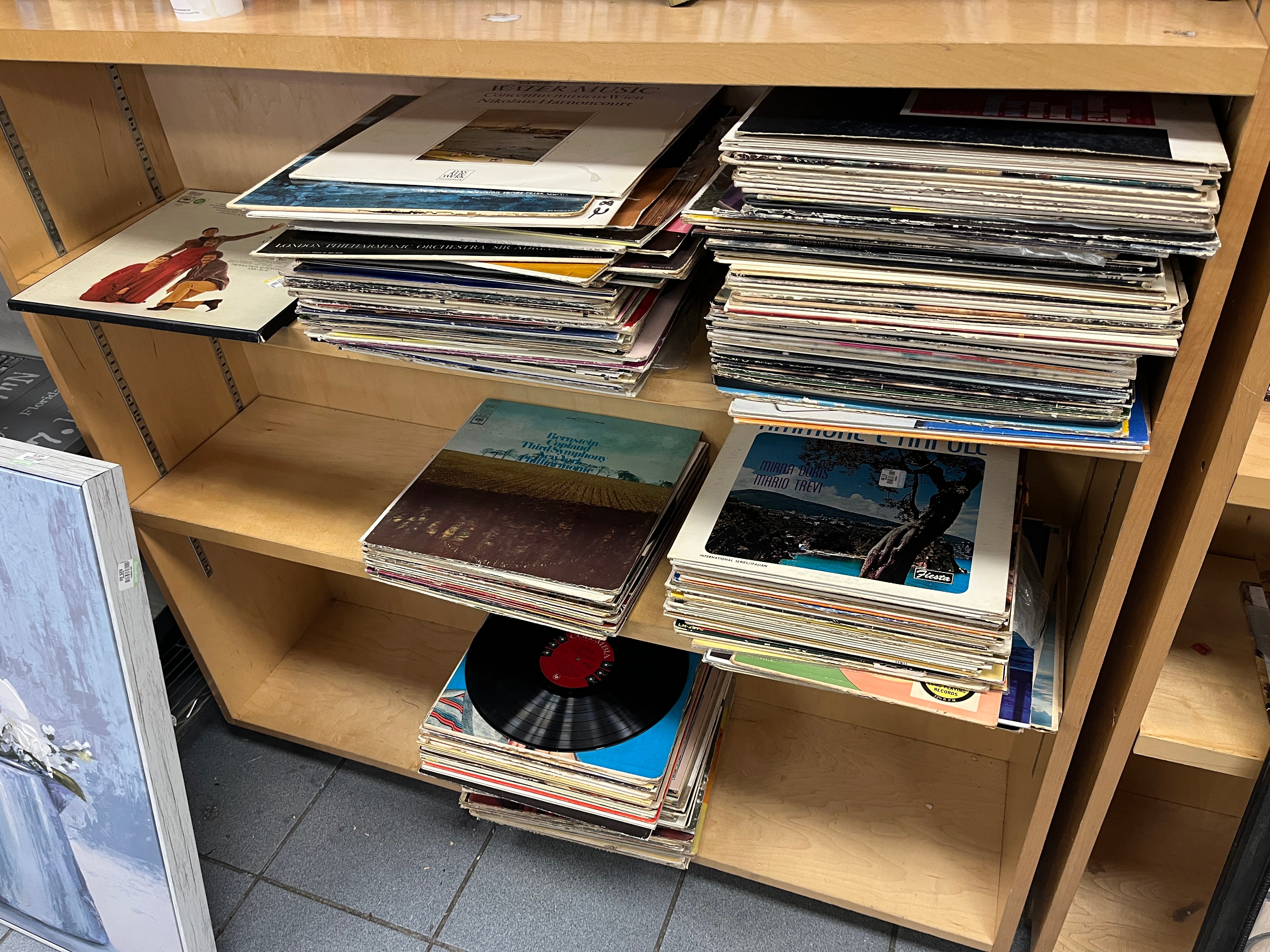
I’ve rifled through a metric ton of record bins in my life. Every Goodwill and thrift shop from Tucson to Tucumcari. When I travel, the first thing I do is hit a thrift and start digging. Friends and I joke about “record lung,” a disease acquired from inhaling LP dust.
I have sampled the hardcore chud so that you don’t have to. Even the Montalvanis. Today, all that useless knowledge (and heavy wheezing) redounds to your benefit: Here are the Top 5 records you can find anywhere and everywhere, which the average bin-flipper dismisses as garbage, but which are fantastic gems. You will not, and should not, pay more than $5 for any of these. But you should buy them without hesitation.
#1
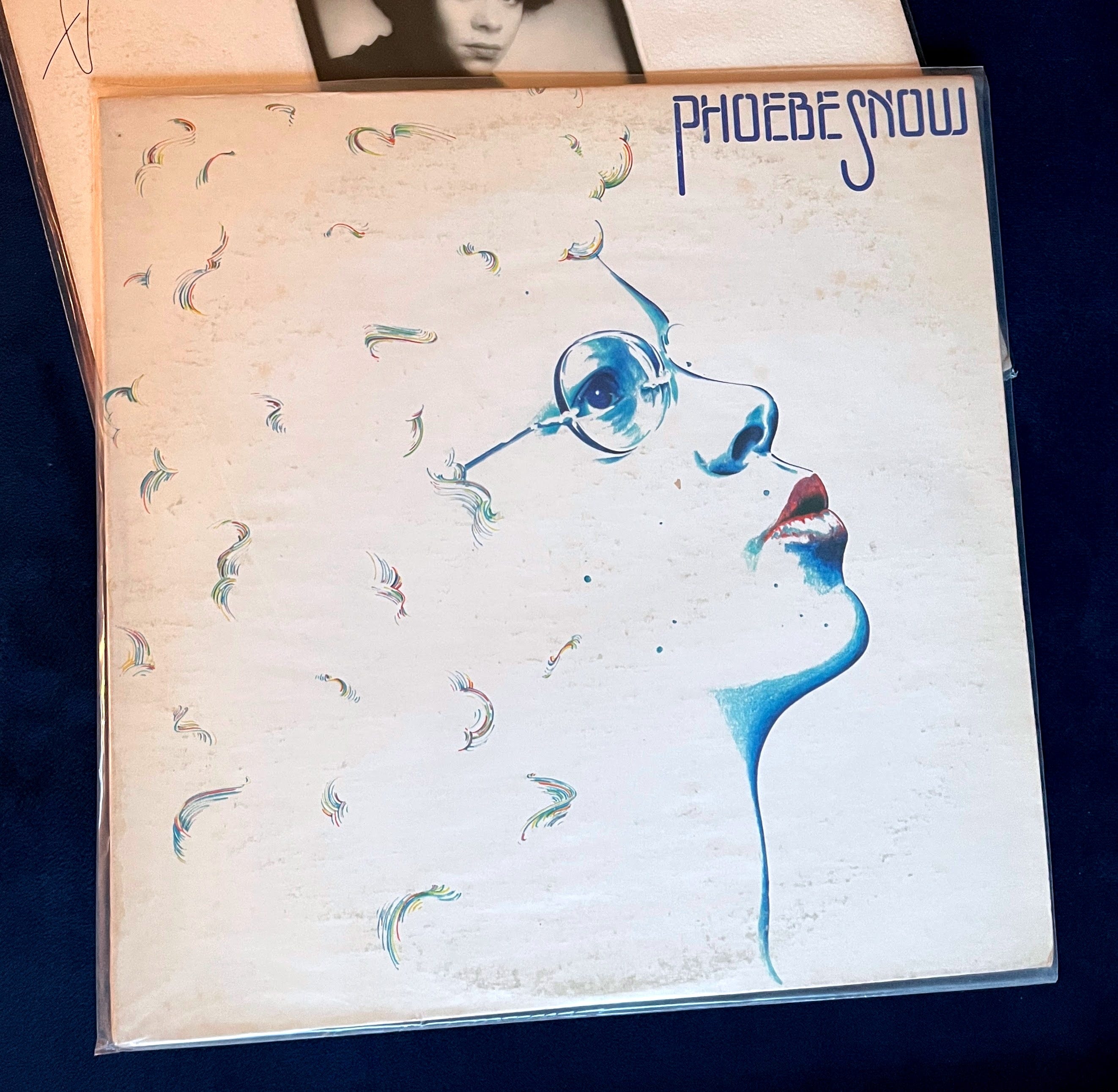
Phoebe Snow’s self-titled album is everywhere and nowhere. You find it in the cut-rate bins but not in the conversation. Which is a damned shame because this is an amazing record. I hate to compare her beautiful jazz-blues vocal style to contemporaries, because she’s so uniquely beautiful, but imagine Joni Mitchell from another mother. This album is a velvet-and-silk 1973 mood. If you care about such things (and I do), the production and fidelity are exquisite. She’s backed by jazz royalty, including Teddy Wilson, Zoot Sims, Ron Carter, and Bob James. On a track called “Good Times,” she’s backed by the Persuasions. Nuff said.
#2
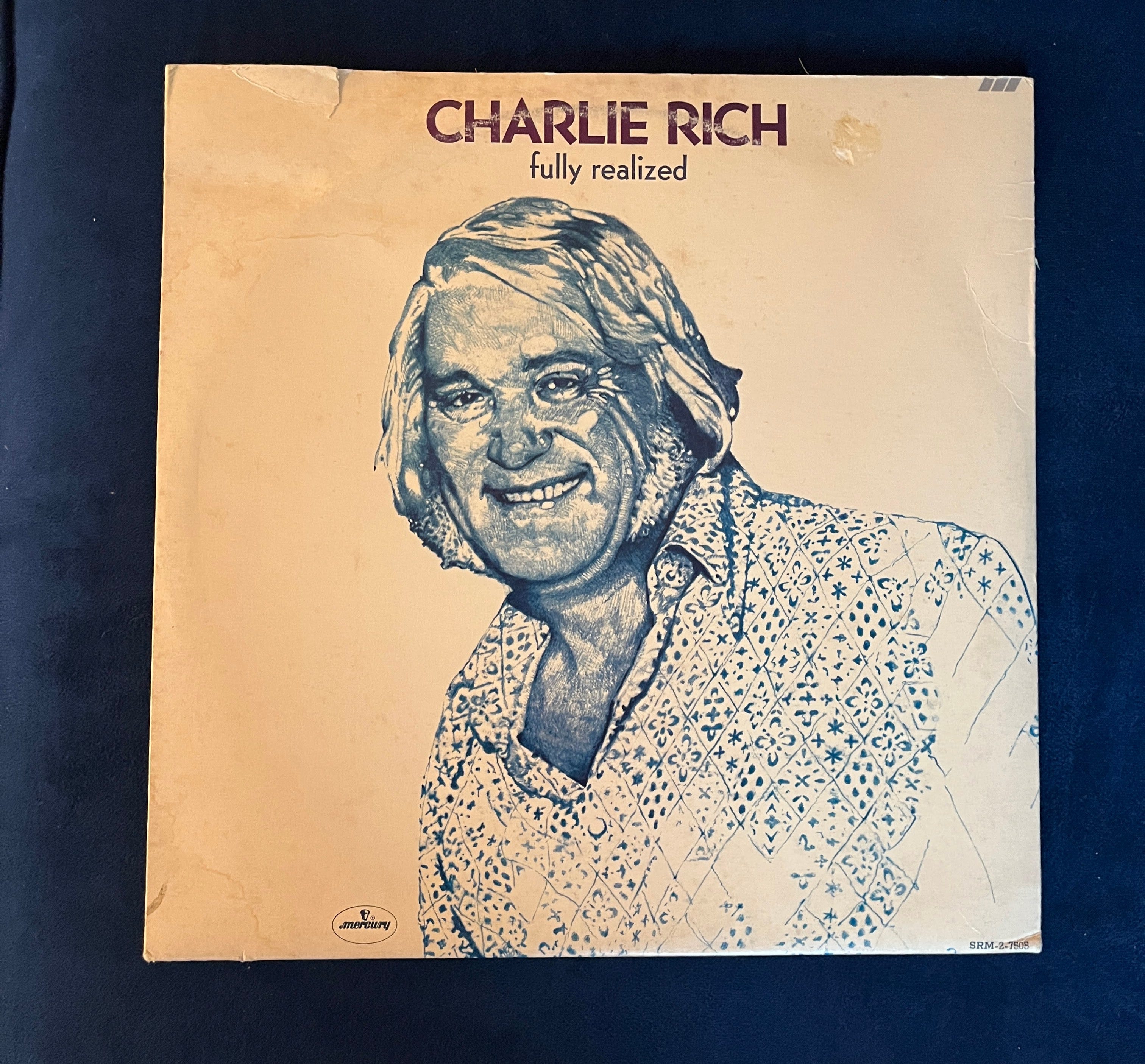
By now, Charlie Rich shouldn’t be an unknown quantity to any self-respecting music lover. But the quantity of albums he’s made can also be daunting and confusing. The man is all over the bins: After megahit “Behind Closed Doors,” in 1973, every cut-rate record grifter churned out a compilation, often with little to no information on them. I’ve written at length about Charlie Rich (for The Oxford American magazine), and the way to make sense of his output is to understand the major eras: the Sun Records era, when Rich was the house piano player for Sam Phillips (BUY); the RCA era when Chet Atkins tried turning him into a country star (AVOID); the Smash Records era, when producer Jerry Kennedy refashioned Rich for the beat music scene, resulting in “Mohair Sam” (Rich opened for the Kinks on teen show, Shindig); and, finally, the Epic period, when producer Billy Sherill converted him into a crossover superstar.
There’s something to recommend in every era, but keep your eyes peeled for the Smash records, especially this compilation, Fully Realized. This is Charlie at his most pop and jangly, his earthy, houndog voice, that bourbon mix of Elvis and Ray Charles, soaring with soul balladry and beat power. I maintain that he really should have broken through with a song like “Can’t Go On”, written by Kenny O’Dell, who later penned “Behind Closed Doors.” Bonus: the liner notes are by the incomparable Peter Guralnick, who profiled and befriended Rich and later produced his final album.
#3
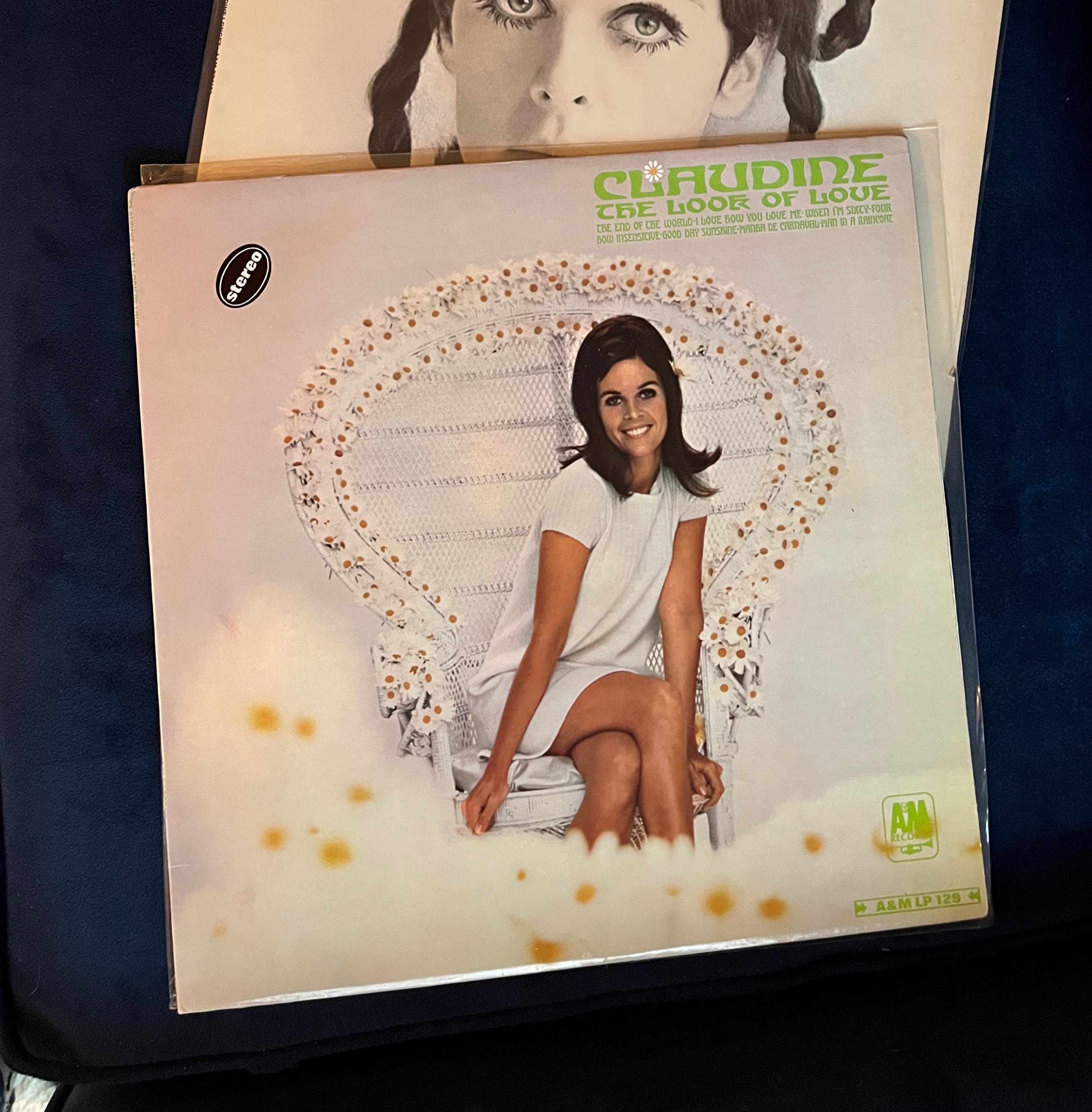
I’ve always been a little obsessed with Claudine Longet, whose music has always mixed uneasily with her backstory—infamously, her tabloid trial for murdering her boyfriend, the Olympic skier Spider Sabich, in Aspen, in 1976 (for which she got off with misdemeanor negligent homicide for “accidentally” shooting him while he was shaving). The Rolling Stones recorded a song about her, “Claudine,” which they didn’t release until this century.
There’s blood in the chalet
And blood in the snow
She washed her hands of the whole damn show
Claudine
Claudine was previously married to Andy Williams (a true chud-meister of the record bins), who supported her during her trial, maybe because she was the mother of his children. They were both close friends of Bobby Kennedy.
That’s all intriguing and interesting, but what about the music? Despite her reputation as both a murderer and a maker of negligible easy listening, her records are pure 1960s pop, full of sublime cinematic soundscapes against which Claudine comes on like a soft-focus French chanteuse entering a garden gate in a wind-blown nightgown, simultaneously luring and alluring. She’s very much in the mode of Jane Berkin and Astrud Gilberto (with similarly bordering-on-silly undertones), but Claudine has the advantage of studio genius Tommy LiPuma producing her, along with a crack A&M wrecking crew. The Look of Love, from 1967, is the kind of record that could well turn you into an audiophile, but it’s also the kind that will simply make your stereo sound better than it actually is. Just listen to the title track. (I’d also suggest two other albums, Colours, from 1968, in which she covers Randy Newman’s “I Think It’s Going to Rain Today,” backed on piano by Randy Newman; and the more obscure Let’s Spend the Night Together, from 1972, issued on Barnaby Records, Andy Williams’ “hip” label, and featuring covers of Neil Young, the Beach Boys, and, yes, the Stones).
#4
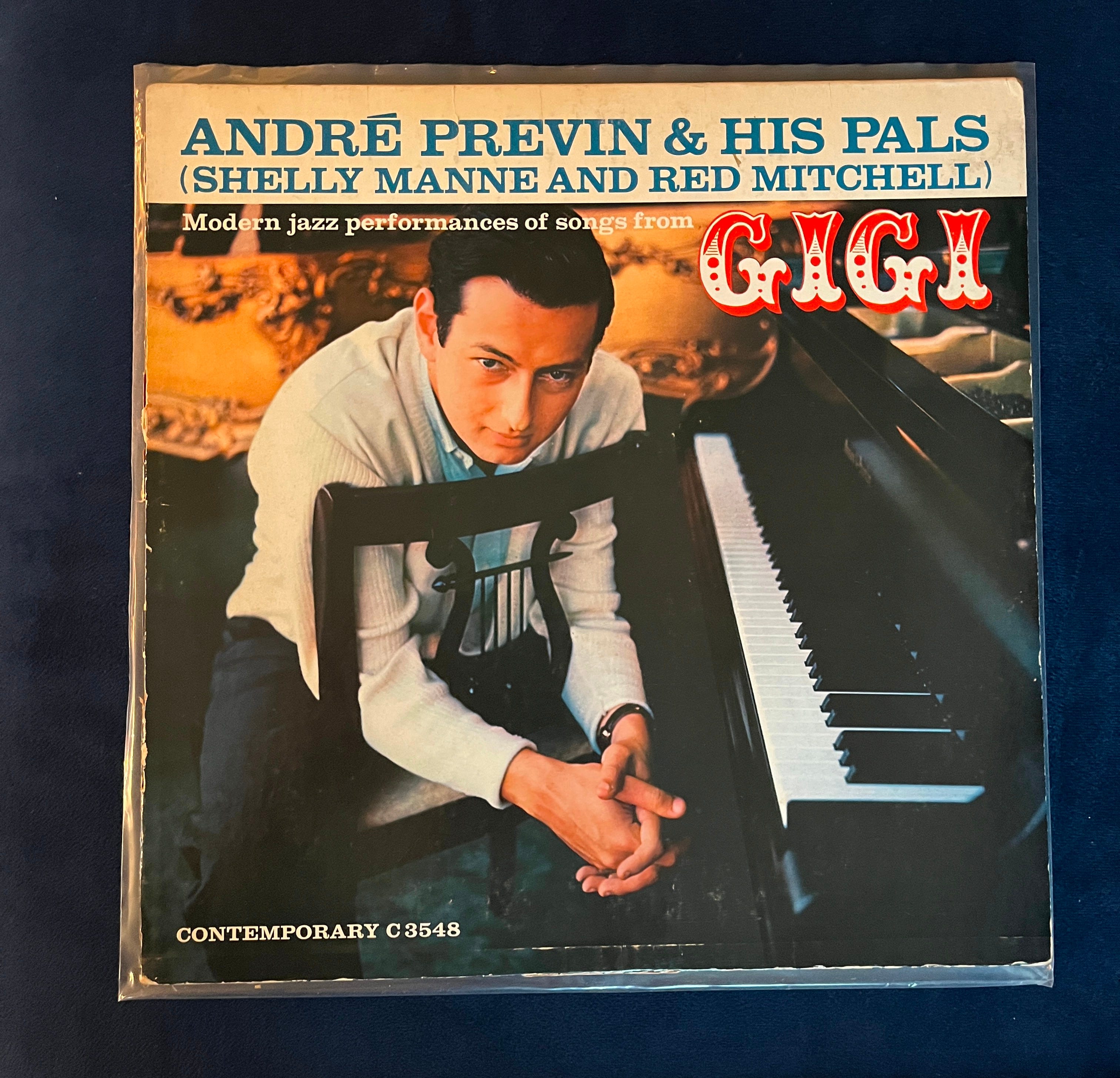
There will never be a shortage of André Previn records. He constitutes his own sedimentary layer in the dollar bins of America. Thus ignored, his records—specifically his forays into jazz—are ubiquitous gold nuggets hiding in plain sight. I never pass them up. Some are on the LA jazz label Contemporary, others are on Columbia. Both are fantastic, but I lean toward the ones featuring Shelly Manne on drums. (On another day, I’ll make the case that Shelly Manne is the skeleton key to collecting jazz records on the cheap).
In digging into Previn over the last few years, I’ve come to think of him as THE great unheralded jazz stylist of the 1960s. Yes, he’s mainly known as a classical player (and arranger and conductor), but his jazz piano is not what you might imagine, never overly dainty, mannered, or trained to stiffness. Quite the opposite: He can display a rough-hewn and aggressive side, moving from delicate, sensitive passages to wild and spectacular displays of improvisation, unafraid of an atonal chord. Throughout, the man swings and swings hard. Though some of his record titles may concern you because they are movie-themed—worry not. All André Previn’s jazz LPs are a buy, including and especially Gigi from 1958. (The title track is a thing of beauty.) I’ll even share a trade secret: Shelly Manne and Previn agreed to switch roles as the leader from album to album in the late 1950s and early 1960s, so Previn is also on Manne’s trio albums, which are listed as Shelley Manne & His Pals.
#5
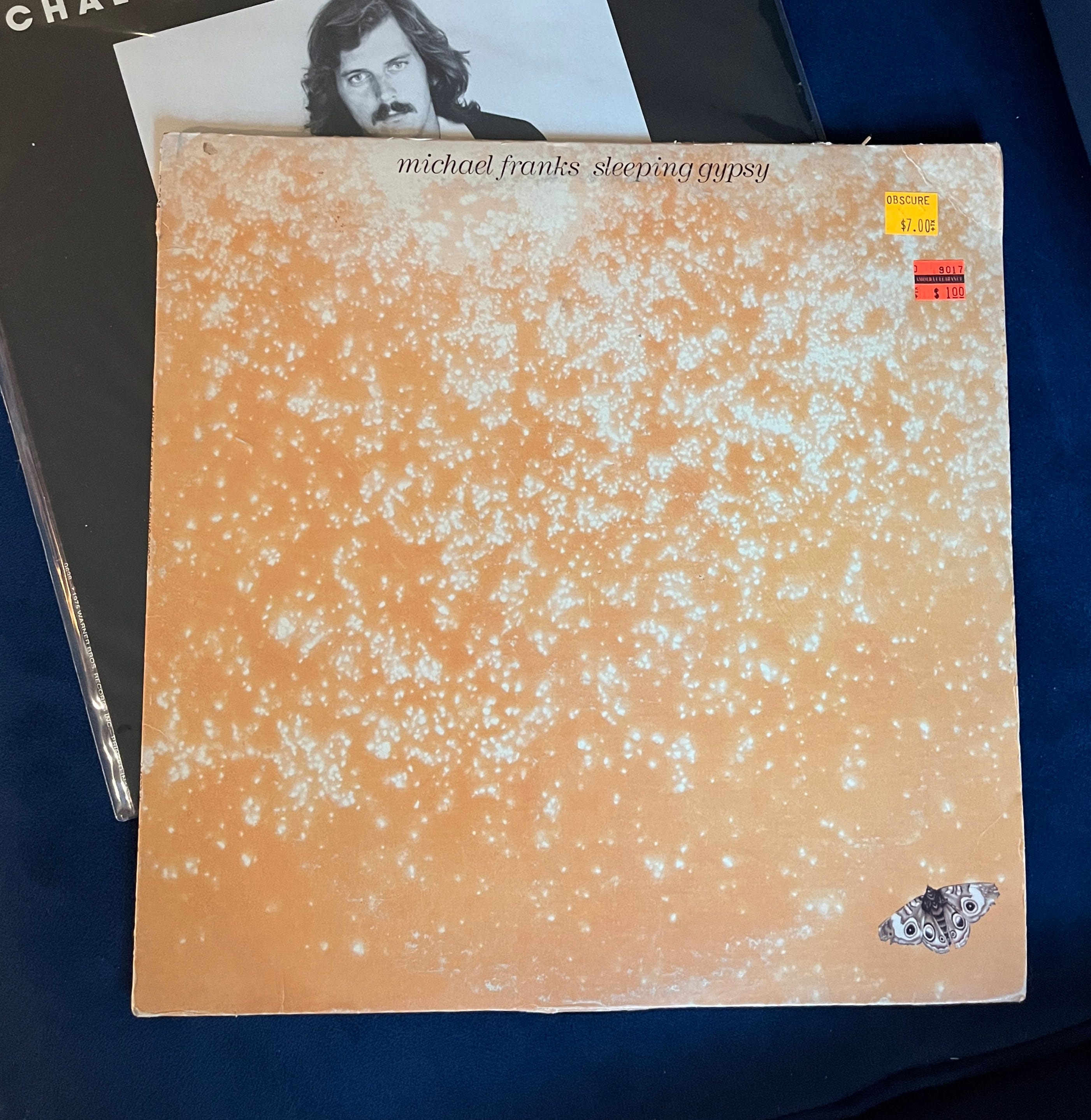
Michael Franks was a guy who started out trying to make soft rock records in the early 1970s and then met Antônio Carlos Jobim and went bonkers for bossa nova. He set his sensitive, sandy vocals and quirky lyricism to a mellow Brazilian beat and never looked back. The downside is that he really never looked back and ended up making the same kind of songs over and over again for years. But on the first three or four albums, which apparently were leafleted from an airplane into the thrift shops, you can hear a man finding a style that fits him beautifully, most convincingly and successfully on this 1977 record, Sleeping Gypsy. It’s produced by (wait for it) Tommy LiPuma, and played by a who’s who of 1970s jazzers, including but not limited to Joe Sample, Michael Brecker, Larry Bunker, and David Sanborn.
Franks might not be to everyone’s taste, but if you like Steely Dan, he’s like a nerdier, less coked-out cousin. Pairs well with a sativa joint, herbal tea, and a successful longterm relationship. (Apparently, Franks is considered a founding father of the “quiet storm” radio format.)
You’re going to know whether you can dig this or not after a few seconds of “The Lady Wants to Know,” with its soft and narcotic beat inlaid with pleasantly opaque lyrics.
Daddy plays the ashtray
Baby starts to cry
Lady wants to know the reason why
Daddy’s just like Coltrane
Baby’s just like Miles
The lady’s just like heaven when she smiles
I am now extremely excited to visit my local record store
Somehow you did Ms. Longet the favor — but your readers none — by not mentioning her voice. Which was damn near invisible. About five octaves shy of Dionne Warwick. That you mentioned the production instead says it all. Caveat emptor. Even in a bargain bin.